
Common Angle Grinder Mistakes and How to Avoid Them
Angle grinders are widely used in workshops, fabrication yards, and construction sites for cutting metal, grinding welds, removing rust, and shaping stone. However, improper use can cause serious injuries due to disc breakage, kickback, sparks, and flying debris.
Common angle grinder mistakes include removing wheel guards, using incorrect discs, ignoring RPM limits, and skipping safety inspections.
This guide explains these mistakes, their risks, and practical prevention methods, along with angle grinder disc selection, personal protective equipment (PPE), and essential safety checks.
What Is an Angle Grinder and Why Do Mistakes Happen?
An angle grinder is a handheld power tool that spins an abrasive disc at 8,000 to 11,000 RPM to cut, grind, sand, or polish metal, masonry, and tile. Mistakes happen because the tool is fast, light, and easy to misuse, so small errors in setup or technique escalate into injuries within seconds.
The tool consists of a motor, a gear head, a spindle with flanges, a disc guard, and a side handle. Each component controls a specific risk. Remove or ignore one, and the others cannot fully compensate.
New users often assume that a lightweight tool is a low-risk tool. In practice, a 125 mm disc stores enough rotational energy to cause severe lacerations if it binds or breaks.
What Are the Most Common Angle Grinder Mistakes?
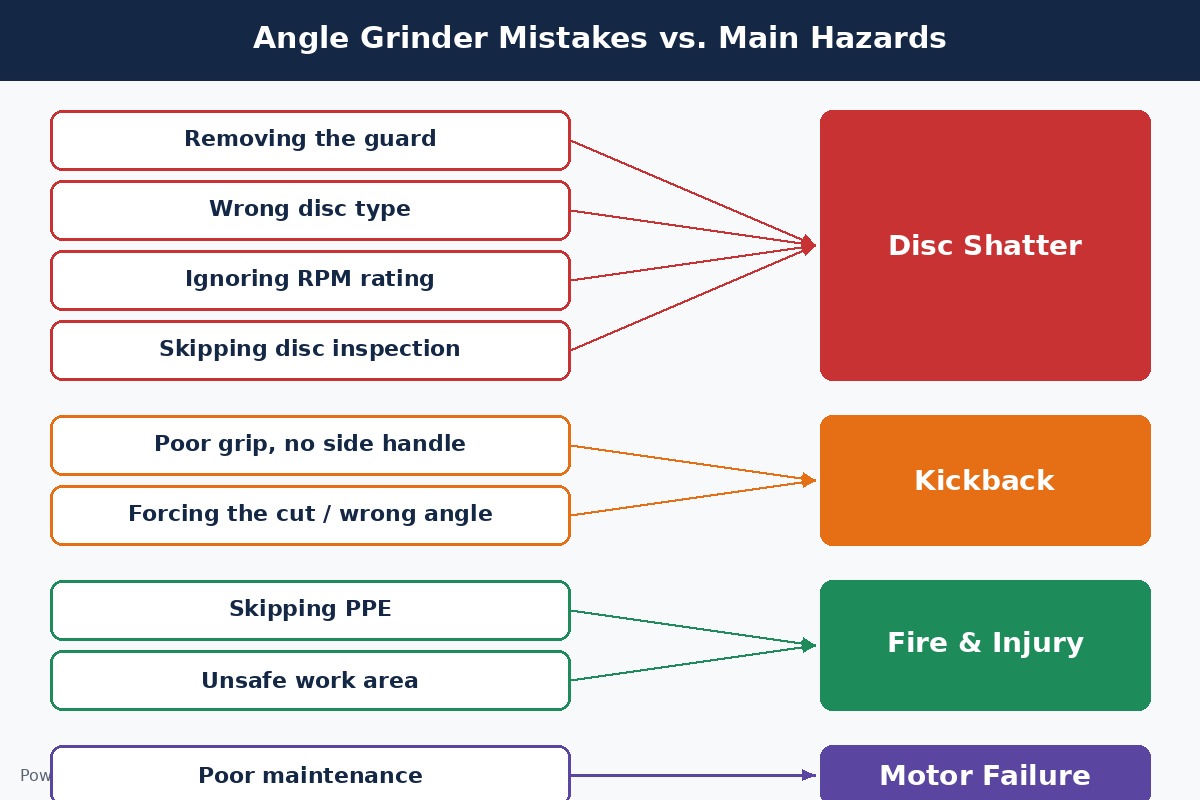
The most common angle grinder mistakes are removing the guard, using the wrong disc, ignoring RPM ratings, skipping disc inspection, gripping poorly, forcing the cut, skipping protective gear, and neglecting the work area and tool upkeep.
Each mistake raises the risk of disc shatter, kickback, or fire, and each is preventable with simple habits. Here is the quick view before the detail:
- Removing or repositioning the guard
- Fitting the wrong disc for the material
- Ignoring disc RPM and diameter ratings
- Skipping the pre-use disc inspection
- Gripping with one hand and no side handle
- Forcing the cut or using the wrong angle
- Working without proper PPE
- Leaving sparks, cords, and loose workpieces unmanaged
- Neglecting maintenance on brushes, vents, and flanges
Why Is Removing the Guard a Mistake?
Removing the guard exposes you to disc fragments, sparks, and a spinning wheel with nothing to deflect debris. The guard is the main barrier between the operator and a shattering disc, so it must stay fitted and positioned between the disc and your body at all times.
Operators usually remove guards to reach tight corners or to fit an oversized disc. Both reasons create risk. Regulations such as OSHA’s abrasive wheel machinery standard require proper guarding, because guards contain fragments when a wheel fails.
If a job needs a smaller guard profile, switch to a smaller grinder. Do not modify the safety equipment.
Why Does Using the Wrong Disc Cause Problems?
Using the wrong disc damages the workpiece and can break the disc under side load. A thin cutting disc is designed for cutting edge-on, while grinding discs and flap discs are built for surface work, so mixing them up leads to cracks, glazing, and poor finishes.
Match the abrasive to the task:
- Cutting disc (1 to 3 mm): straight cuts in steel, pipe, and rebar
- Grinding disc (6 mm): weld removal and heavy stock removal
- Flap disc: blending, deburring, and finishing
- Diamond blade: tile, concrete, and masonry
- Wire brush or strip disc: rust and paint removal
Material matters too. Stainless steel needs iron-free abrasives to avoid contamination and rust spots. Aluminum clogs standard discs and needs a non-loading type.
Why Does Ignoring RPM Ratings Matter?
Every abrasive disc has a maximum operating speed, and the grinder’s no-load speed must never exceed it. Fitting a disc rated below the tool’s RPM can make it burst, because centrifugal force grows with speed and the disc cannot hold together.
Check the printed maximum RPM on the disc label against the grinder’s rated speed. Confirm the diameter too. A 125 mm disc on a 115 mm guard leaves the guard unable to contain debris.
Quality abrasives follow recognized standards such as EN 12413 for bonded abrasive products. Look for that marking on the label.
Why Should You Inspect the Disc Before Every Use?
Inspecting the disc catches cracks, chips, and moisture damage before they cause a failure at full speed. A damaged disc can disintegrate within seconds of startup, so check it visually, tap-test bonded discs, and run the tool for one minute with the guard facing away from you.
Also check the expiry date printed on resin-bonded discs. Old or damp discs lose strength. Store them flat, dry, and away from temperature extremes.
Never use a disc that has been dropped, even if it looks undamaged.
How Does Poor Grip Lead to Kickback?
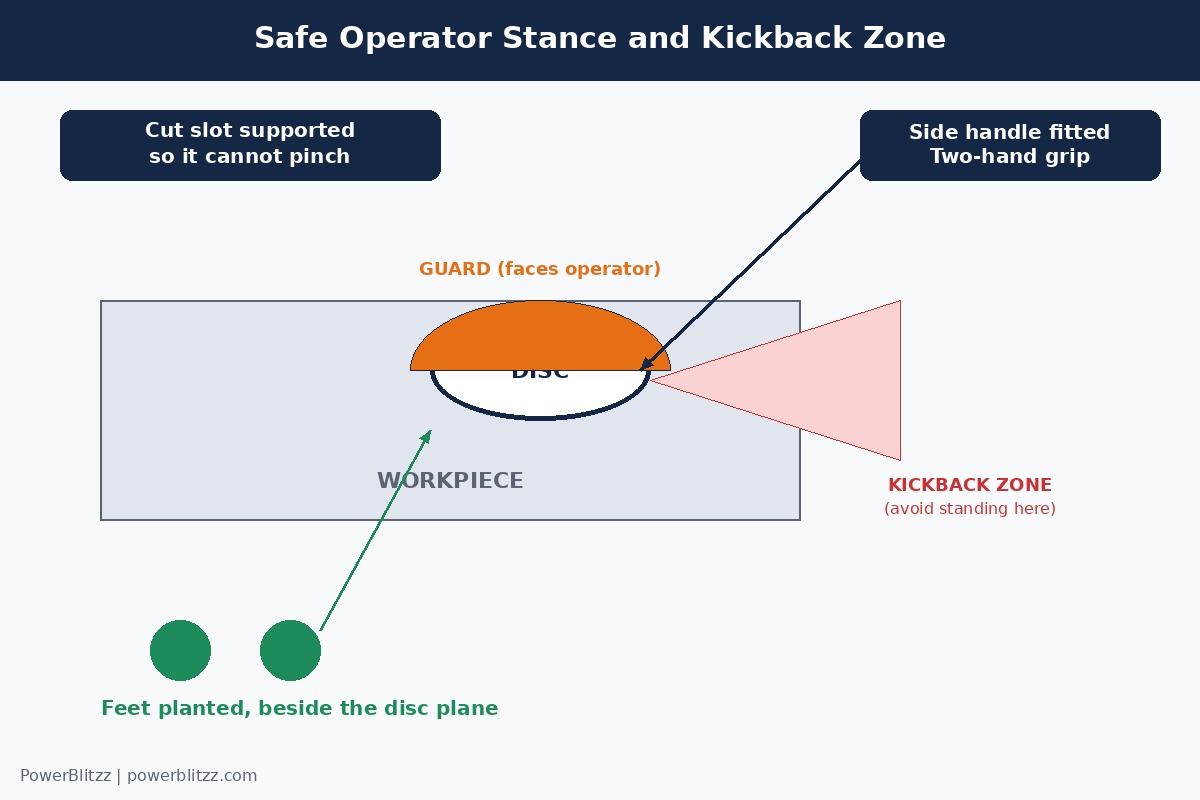
Kickback happens when the disc binds or pinches in the workpiece and the grinder jerks back toward the operator. A one-handed grip without the side handle removes your control, so the tool twists out of your hands before you can react.
Use these habits to keep control:
- Fit the side handle and hold the grinder with both hands
- Stand beside the disc plane, never directly behind it
- Support the workpiece so the cut slot cannot close on the disc
- Let the grinder reach full speed before touching the material
- Keep a firm stance with both feet planted
Looking for the Right Angle Grinder?
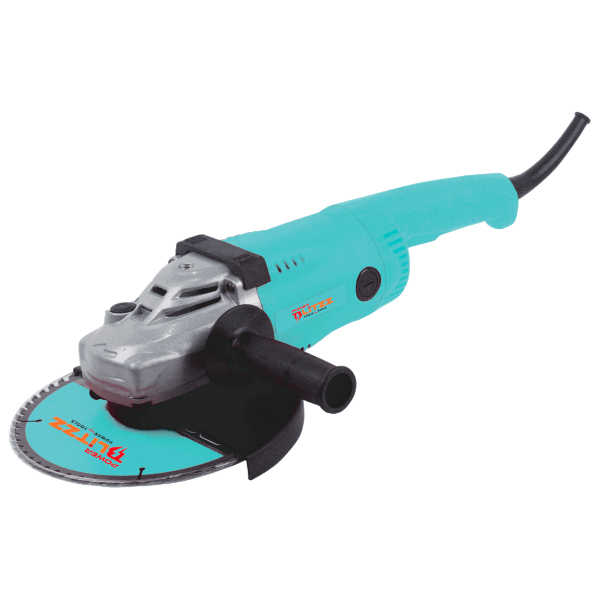
Not sure your current grinder has the right safety features? Explore our angle grinder range to compare power ratings, disc sizes, guard designs, and handle options for your workshop or project.
Why Is Forcing the Cut a Mistake?
Forcing the cut overloads the motor, overheats the disc, and increases the chance of binding. A grinder works best when the abrasive does the cutting at a steady pace, so use light pressure, correct angle, and let the disc speed do the work.
Angles matter:
- Grinding discs work best at roughly 15 to 30 degrees to the surface
- Flap discs work at a shallower angle for blending
- Cutting discs must stay perpendicular to the cut and never be used for side grinding
Do not twist or lever a cutting disc inside a slot. Thin discs are strong along the cut and weak sideways.
Why Does Skipping PPE Increase Injury Risk?
Skipping personal protective equipment leaves your eyes, hearing, lungs, and hands exposed to sparks, noise, and dust. Safety glasses with a face shield, hearing protection, a respirator rated for the material, and cut-resistant gloves form the minimum kit for any angle grinder task.
Avoid loose sleeves, dangling cords, and untied hair. Rotating parts catch fabric quickly.
Grinding metal produces fine particulates, and cutting masonry produces silica dust. Use dust extraction or wet methods where possible and wear a respirator suited to the hazard.
How Does an Unsafe Work Area Cause Accidents?
An unsafe work area turns sparks into fires and loose cords into trip or cut hazards. Clear flammable materials within the spark path, secure the workpiece with a clamp or vise, and route the power cable behind you and away from the disc.
A few more rules apply:
- Unplug the grinder before changing discs or adjusting the guard
- Wait for the disc to stop completely before setting the tool down
- Choose a model with restart protection so it does not start after a power cut
- Keep bystanders outside the spark and debris zone
Can Poor Maintenance Make an Angle Grinder Unsafe?
Poor maintenance causes overheating, vibration, and sudden power loss, because worn carbon brushes, clogged vents, and loose spindle flanges strain the motor and unbalance the disc. Inspect these parts regularly, clean the vents after each shift, and replace damaged cords before they cause a failure.
Check that the flange nut is tight and the flanges are flat and undamaged. A bent flange can wobble the disc and cause cracks. For professional use, log inspections so recurring faults surface early.
How Do You Choose Right Disc and Angle Grinder Machine?
Choose the disc by material and task, then choose a grinder whose power, disc diameter, and safety features match that workload. A 115 mm or 125 mm grinder with a side handle, adjustable guard, and restart protection covers most workshop and site tasks safely.
Use this quick matrix:
| Task | Material | Recommended Disc | Typical Grinder Size |
|---|---|---|---|
| Cutting | Mild steel, pipe | Thin cutting disc | 115 to 125 mm |
| Weld removal | Steel | Grinding disc | 125 to 180 mm |
| Blending and finishing | Steel, stainless steel | Flap disc | 115 to 125 mm |
| Cutting tile or concrete | Masonry | Diamond blade | 115 to 230 mm |
| Rust and paint removal | Steel | Wire brush or strip disc | 115 to 125 mm |
When comparing machines, look at these features:
- Power rating and no-load speed matched to the discs you use
- Adjustable, tool-free guard that stays on
- Paddle or dead-man switch that stops the disc when released
- Soft start and restart protection to reduce torque jerk
- Vibration reduction and a well-placed side handle
Heavy daily use calls for a higher-wattage machine with sealed bearings and replaceable brushes. Occasional DIY use rarely needs more than a compact 115 mm model.
What Is a Safe Pre-Use Checklist for an Angle Grinder?
A safe pre-use checklist covers the tool, the disc, the guard, the work area, and your protective gear in that order. Completing these five checks takes about two minutes and prevents most of the disc, kickback, and fire failures described above.
- Tool: inspect the cord, switch, vents, and side handle
- Disc: confirm the type, diameter, RPM rating, and condition
- Guard: fit it correctly and angle it toward your body
- Work area: clear flammables, clamp the workpiece, route the cord
- PPE: wear a face shield, glasses, hearing protection, respirator, and gloves
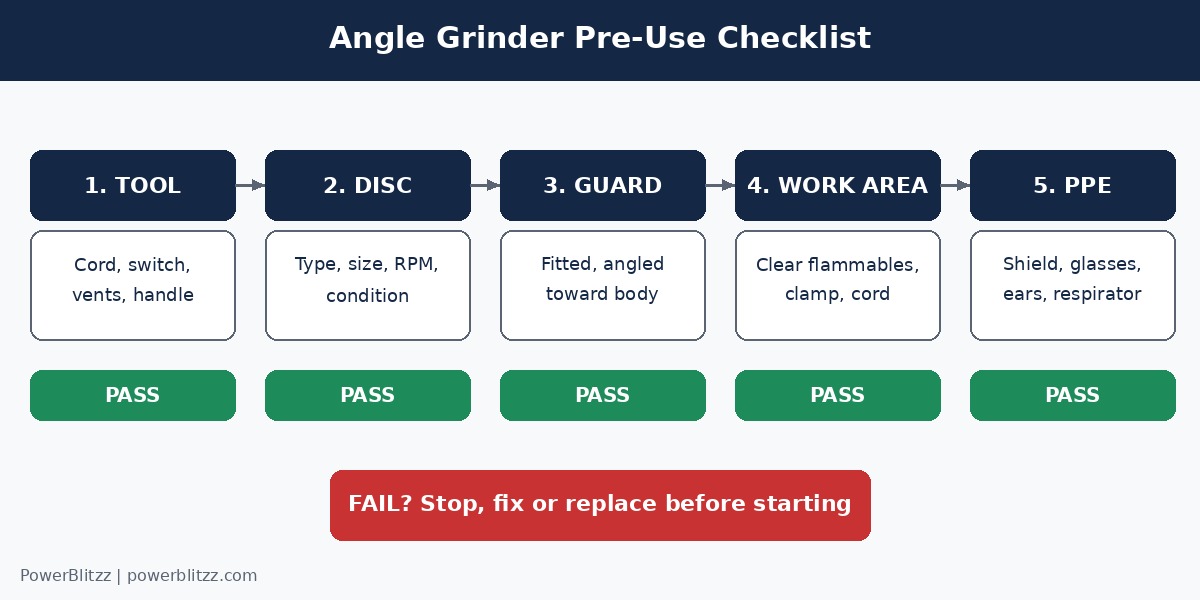
Teams can print this flow and post it near the tool station. Consistent routines matter more than occasional perfect checks.
Are Angle Grinder Safety Habits Worth the Effort?
Yes, safe habits are worth the effort because most serious angle grinder injuries trace back to preventable mistakes in disc choice, guarding, grip, or protection. The checks cost minutes, while a single disc failure can cost an eye, a hand, or weeks of lost work.
Your priorities depend on how you use the tool. Occasional DIY users benefit most from the right disc, the side handle, and eye and face protection. Professional fabricators and contractors should add formal inspections, restart protection, and dust control.
Industrial teams running grinders daily should also standardize disc stock, train operators, and schedule maintenance. The common thread is simple: avoiding the mistakes above costs far less than recovering from them.
Need Help Choosing a Safer Grinder?
Get expert advice on angle grinder machines, suitable discs, and essential safety features for your projects in Sharjah, Dubai, and across the UAE.
FAQs
Can I use an angle grinder without a guard?
No. An angle grinder should never be used without its guard because the guard contains fragments if the disc breaks and deflects sparks away from your face and body. If the guard blocks a task, switch to a smaller grinder or a different tool instead of removing it.
Which disc is best for cutting metal with an angle grinder?
A thin resin-bonded cutting disc, typically 1 to 3 mm thick, is best for cutting steel, pipe, and rebar. Use an iron-free version for stainless steel. Keep the disc perpendicular to the cut, and never use a cutting disc for side grinding.
How often should I replace an angle grinder disc?
Replace a disc when it shows cracks, chips, deep wear, or reaches its expiry date, and always after a drop or impact. There is no fixed time interval because wear depends on material and pressure. Inspect the disc before every use to decide.

Popular Posts
November 8, 2023
November 14, 2023
November 28, 2023
December 4, 2023
December 13, 2023
Copyright © 2024 – Power Blitzz– All rights reserved.