
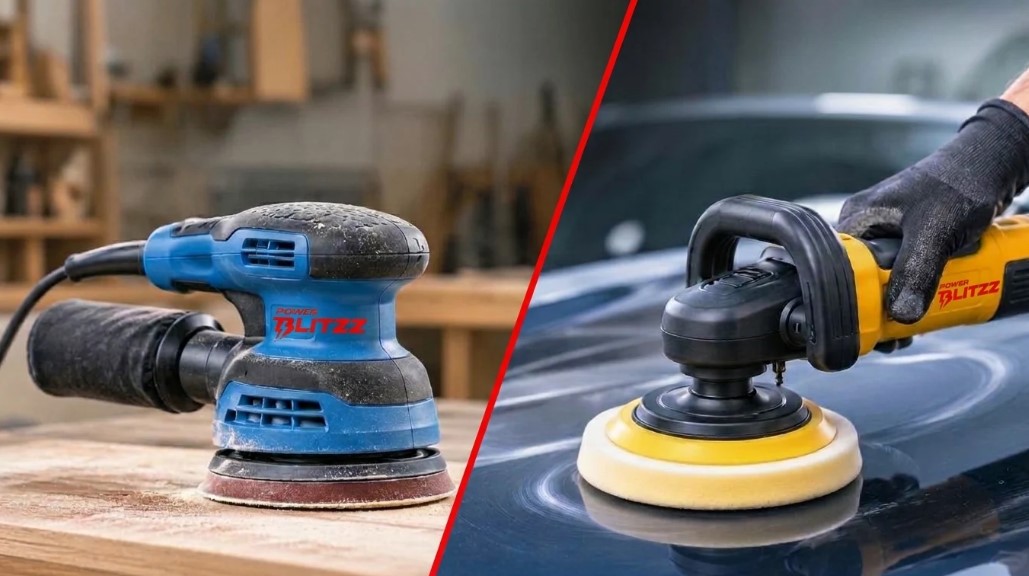
What Is The Difference Between Sander vs Polisher?
Walk into any workshop in Dubai or Sharjah and you will see both tools on the bench. Buyers still mix them up, and the mistake is expensive. The wrong tool can scratch a clear coat, burn through paint, or leave a dull surface that looks unfinished.
The sander vs polisher question comes up more often as DIY, car detailing, and furniture restoration grow in the UAE. Both tools spin or oscillate. They do opposite jobs. This guide explains what each tool does, where each one fits, and how to buy the right one.
What Is the Difference Between a Sander and a Polisher?
A sander removes material to level and smooth a surface using abrasive paper. A polisher adds gloss and clarity by refining a surface with a pad and compound. In short, sanders cut and shape, while polishers refine and shine.
The difference comes down to purpose, not appearance. Sanding is a preparation step. Polishing is a finishing step. Think of it as a sequence. You sand to remove scratches, old paint, or roughness. You polish to remove fine marks and bring out depth.
Both tools appear in woodworking, metal fabrication, automotive refinishing, and stone work. This is why buyers searching for a polisher and sander supplier in UAE often need advice before purchase.
How Does a Sander Work?
A sander uses a motor to move an abrasive pad in an orbital or random-orbit pattern. The abrasive paper grinds away a thin layer of material. Coarse grit removes heavy defects, and fine grit leaves a smooth surface ready for paint, lacquer, or polish.
An orbital sander is the most common type for general work. Its random motion reduces visible swirl marks compared with a plain rotary action. This makes it suitable for wood, drywall, filler, and primed metal.
A larger pad covers more area per pass. For example, the BT-OSM185 orbital sander 185mm suits wide surfaces where speed and even coverage matter.
Key sander parameters to check:
- Pad size: larger pads cover more surface per pass
- Grit range: typically 60 to 400, from coarse to fine
- Dust extraction: a port or bag reduces airborne particles
- Variable speed: lets you match the tool to the material
Sander vs polisher comparison matrix showing material removal against surface refinement
[DIAGRAM SPEC: Sander vs Polisher Comparison Matrix. File: sander-vs-polisher-comparison-matrix.jpg. Alt text (87 chars): Sander vs polisher comparison matrix showing material removal against surface refinement.]
How Does a Polisher Work?
A polisher spins or oscillates a soft pad loaded with compound or polish. The compound contains fine abrasives that level microscopic scratches. As the surface becomes smoother, it reflects light more evenly, which creates gloss.
Two main designs exist. Rotary polishers spin on a single axis and cut fast, but they need a skilled hand because they can generate heat. Dual-action polishers add an oscillating motion that lowers the risk of burning paint, so they suit beginners and detailers.
A dependable electric polisher gives steady speed control, which matters on curved panels. The BT-EPM7 electric polisher is a practical option for vehicle paint, metal, and similar surfaces.
Common polisher pads:
- Wool pads: fastest cut, used for heavy oxidation
- Foam cutting pads: moderate cut for swirl marks
- Foam finishing pads: low cut for final gloss
Sander vs Polisher: Side-by-Side Comparison
Sanders removes material using abrasive paper, while polishers refine surfaces using pads and compounds. A sander is the first step in surface preparation. A polisher is the last step for shine. They differ in accessories, motion, speed, and finishing result.
| Factor | Sander | Polisher |
|---|---|---|
| Primary Purpose | Smoothing and leveling | Gloss and refinement |
| Consumable | Sandpaper discs | Pads and compound |
| Material Removal | Moderate to high | Very low |
| Typical Motion | Orbital or random orbit | Rotary or dual-action |
| Best For | Prep, stripping, shaping | Final finish, restoration |
| Risk If Misused | Deep scratches, uneven surface | Heat damage, paint burn-through |
Understanding the orbital sander vs polisher gap protects your budget. A sander cannot give a mirror finish, and a polisher cannot flatten a rough panel.
Can a Polisher Be Used as a Sander?
No, a polisher is not a proper substitute for a sander. Polisher pads and speeds are designed for light refinement, not material removal. Attaching sandpaper to a polisher can cause uneven cutting, heat build-up, and a poor finish.
Some multi-purpose tools allow accessory changes, but results depend on the tool design. The reverse is also true. A sander fitted with a polishing pad lacks the speed control and pad stability that polishing needs.
For consistent results, use a dedicated tool for each stage. This is the answer most professionals give when asked about a sander or polisher for car paint: you need both, in the right order.
Which Tool Should You Use First?
Use the sander first, then the polisher. Sanding removes defects and levels the surface, and polishing then refines it. Reversing the order wastes compound and leaves scratches under the gloss.
Decision flow showing when to use a sander, a polisher, or both for surface finishing If the surface is already smooth but looks dull, skip sanding and polish only. If it is rough, scratched, or uneven, sand first.
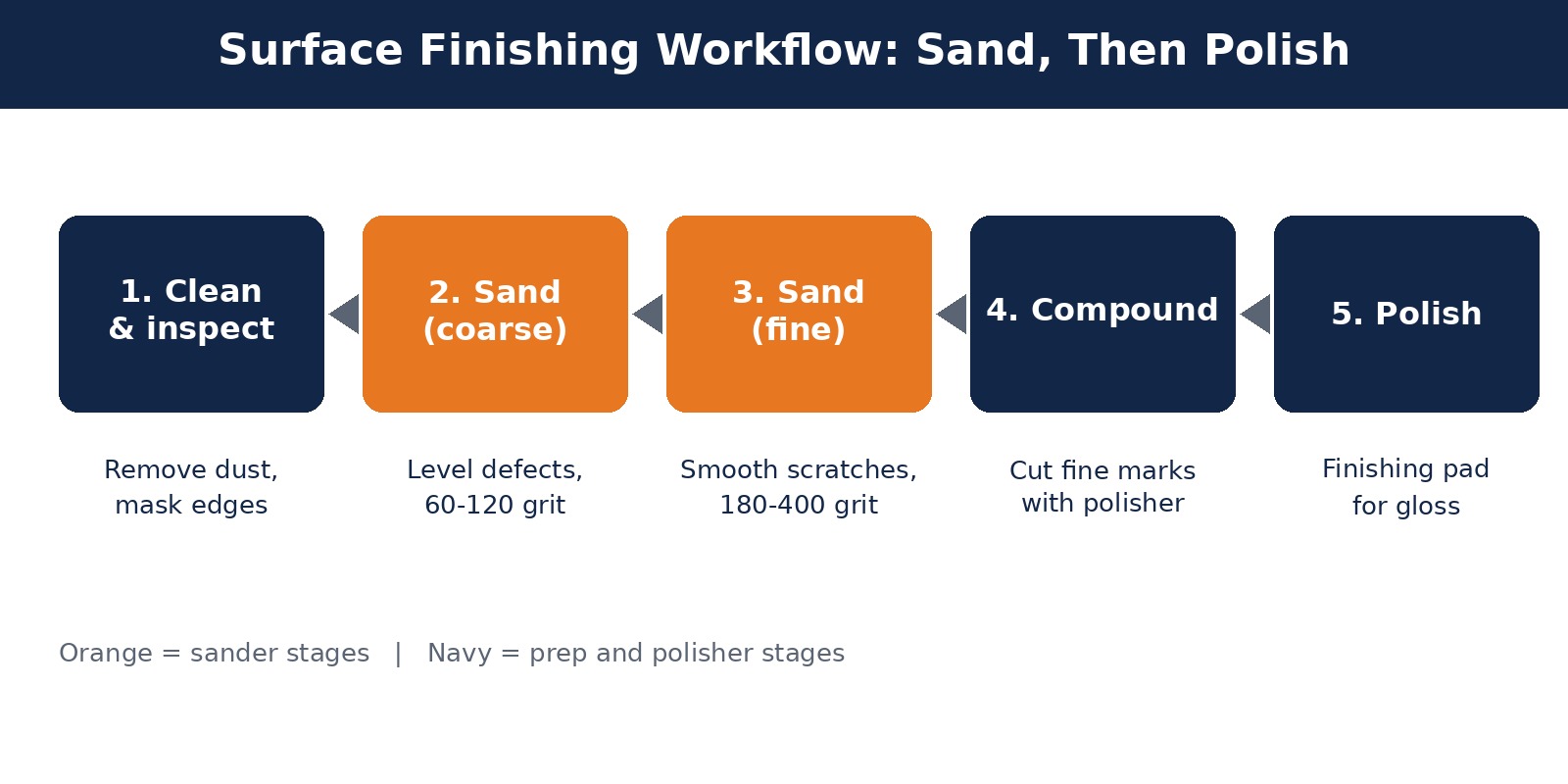
A practical sequence:
- Clean the surface and mask nearby edges.
- Sand with coarse grit to remove major defects.
- Move to finer grit to remove sanding marks.
- Apply compound with the polisher to refine.
- Switch to a finishing pad for final gloss.
Five-step workflow from cleaning to sanding to compounding and final polishing
How Do You Choose Between a Sander and a Polisher?
Choose a sander if your job involves smoothing, stripping, or preparing a surface. Choose a polisher if your job involves restoring shine to an already smooth surface. If your project covers both preparation and finishing, buy both tools.
Match the tool to the material and the result you want:
- Wood furniture or doors: orbital sander first, light polish or wax after
- Car paint with swirl marks: dual-action polisher with cutting then finishing pad
- Metal fabrication: sander for weld cleanup, polisher for brightness
- Walls and filler: sander for levelling before painting
Climate also matters in the Gulf. High temperatures cause compounds to dry faster, so work in shade and in small sections. This keeps the finish even and the pads clean.
Looking for the Right Polisher or Sander?
Explore a full range of polishers and sanders from a trusted supplier in UAE. Compare pad sizes, power ratings, and accessories to find the right tools for your workshop.
Are There Safety and Dust Control Risks?
Yes. Sanding creates fine dust that can irritate lungs and eyes, and polishing can throw compound splatter and generate heat. Wear a dust mask, eye protection, and gloves, and use extraction wherever possible.
Dust control is especially important when sanding old paint, fillers, or masonry, since some materials release harmful particles. The U.S. Occupational Safety and Health Administration publishes guidance on respirable dust hazards at OSHA’s crystalline silica resource.
Basic safety controls:
- Use tools with dust bags or extraction ports
- Keep cords clear of the work area
- Let heat dissipate between polishing passes
- Replace worn pads and discs promptly
Final Verdict: Is the Difference Worth Knowing?
Yes, the sander vs polisher difference matters for anyone who finishes surfaces. A sander prepares, and a polisher perfects. Buying the wrong one wastes money, and using the wrong one risks damage.
If you work on rough surfaces, a sander is the priority. If you maintain vehicles or restore dull finishes, a polisher delivers the most visible result. For complete projects, the two tools work best together.
Ready to Equip Your Workshop?
Explore reliable polishers and sanders for your workshop. Talk to the Power Blitzz team for a quote and expert guidance on choosing the right tools in Sharjah, Dubai, and across the UAE.
FAQs
What is the main difference between a sander and a polisher?
A sander removes material to smooth and level a surface using sandpaper. A polisher refines the surface using pads and compound to create gloss. Sanding comes first, and polishing comes last.
Can I use an orbital sander to polish a car?
Not recommended. An orbital sander lacks the speed control and pad design needed for safe polishing, and it can damage a clear coat. Use a dual-action or rotary polisher for vehicle paint.
Do I need both a sander and a polisher?
It depends on the project. For rough or uneven surfaces, start with a sander. For smooth but dull surfaces, a polisher alone is enough. For full restoration, you need both.

Popular Posts
November 8, 2023
November 14, 2023
November 28, 2023
December 4, 2023
December 13, 2023
Copyright © 2024 – Power Blitzz– All rights reserved.