
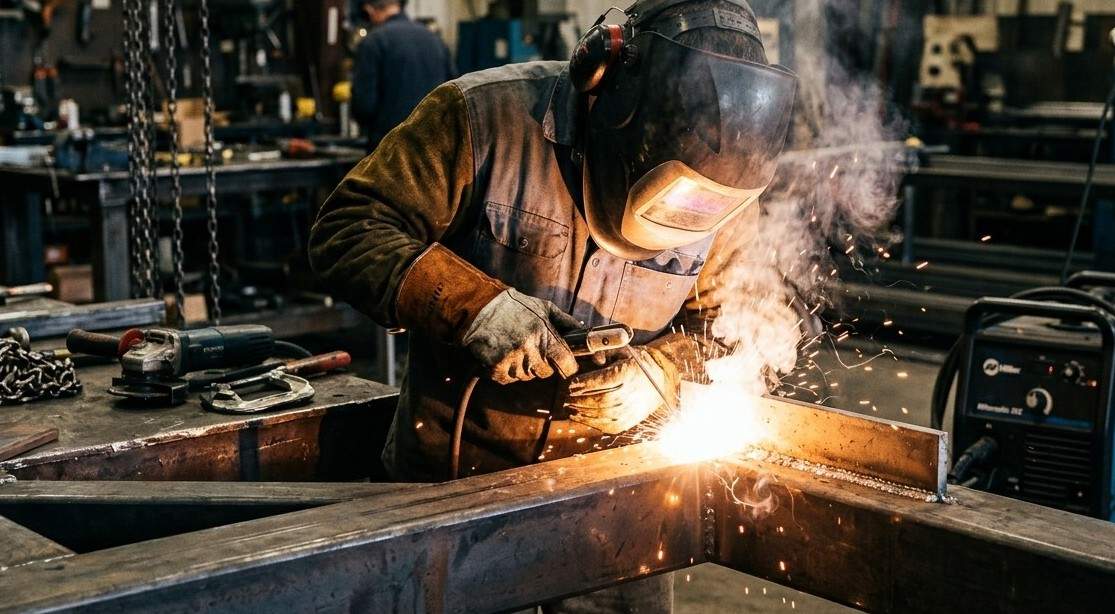
Welding Safety Precautions Every UAE Professional Must Know
Welding is at the heart of everything built in this region, from fabrication yards along the coast to high-rise construction sites inland.
It is demanding, skilled work that most industries cannot function without. But it is also one of the most dangerous trades when people get complacent, and the Gulf climate adds layers of risk that professionals in other parts of the world simply do not deal with.
Extreme heat, coastal humidity, high-voltage equipment, and compressed gases all come together on the same site. This guide is written for welders and site supervisors who want to know what actually keeps people safe, not just what looks good on a safety checklist.
Common Welding Hazards You Cannot Afford to Ignore
Most welders know about burns and sparks. What tends to cause serious injuries are the hazards that build up slowly or strike when someone feels most confident.
Electric shock does not give you a warning. Even secondary voltage in the 20 to 100V range can be lethal when skin is wet or insulation has worn through. In coastal cities like Fujairah or Sharjah, overnight condensation settles on structural steel and metal decking in a way that creates real electrocution risk before the first arc is struck.
Fume inhalation is the damage you do not feel right away. Stainless steel welding releases hexavalent chromium, a confirmed carcinogen. Galvanized steel produces zinc oxide fumes. Aluminum work generates ozone.
Repeated exposure without proper respiratory protection leads to chronic lung disease, and in some cases neurological damage, long before any symptoms become obvious.
Arc eye is exactly what it sounds like and it happens in seconds. The UV and infrared radiation from an unprotected arc causes photokeratitis, a corneal burn that feels like sand in your eyes and can temporarily affect vision. Experienced welders who have had it once do not take shortcuts with their helmet again.
Fire and explosion are a constant risk anywhere that welding happens near stored fuel, gas cylinders, solvents, or paint. Sparks from a heavy MMA weld can travel six meters and stay hot enough to ignite dry timber or foam insulation on contact. The danger is not always visible until something catches.
Heat illness is underestimated by workers who are not acclimatized to Gulf summers. Working in full protective gear under 45 degree heat next to a welding arc pushes the body toward heat exhaustion faster than most people expect. Fatigue from heat affects concentration and judgment, which is when mistakes with high-voltage equipment tend to happen.
What Proper PPE Actually Looks Like for Welding Work
PPE requirements under OSHAD are a legal obligation on the employer, but wearing it properly is the responsibility of the welder. There is a difference between having the gear on site and using it correctly.
- Welding helmet: Shade 10 to 12 works for most MMA applications, adjusted higher for TIG at greater amperage. Auto-darkening helmets are worth the investment because they eliminate the brief moment of arc exposure that happens when you flip a passive helmet too late. Look for ESMA-compliant or EN 379-rated lenses and always keep safety glasses on underneath.
- Flame-resistant clothing: Cotton and leather protect you. Synthetics melt onto skin. Sleeves need to be full length with no cuffs to catch sparks, and trouser legs should overlap the top of the boot. For outdoor work in Gulf summers, lightweight FR-rated cotton is far more practical than heavy leather jackets.
- Welding gloves: Thick cowhide gauntlets for MMA and stick work, lighter goatskin for TIG where you need finger sensitivity. Wet gloves are not just uncomfortable, wet insulation provides no real protection against electrical contact.
- Respiratory protection: A standard dust mask filters nothing relevant to welding fumes. At minimum, a half-face respirator with P100 particulate filters and OV cartridges is needed for coated or non-ferrous metals. Inside tanks, pipe sections, or any confined space, supplied-air breathing apparatus is the correct standard, not a precaution.
- Safety footwear: Steel-toed leather boots with non-conductive, non-slip soles. On active construction sites ankle protection and puncture-resistant midsoles are just as important as the toe cap.
- Ear protection: Foam earplugs rated NRR 29 or above handle most welding environments. When grinding is happening alongside welding, earmuffs give more consistent noise reduction.
Setting Up the Work Area Before You Begin
A significant number of site accidents happen before the machine is even switched on. The work area setup is not a formality.
Clear anything flammable from at least ten meters around the weld zone. LPG cylinders, solvent containers, timber, and foam insulation boards all need to be moved or properly covered with certified welding blankets. Dubai Civil Defense requirements on this are enforceable, not advisory, on any permitted site.
Before every session, physically check the equipment. Run your hands along cables looking for cracked or soft spots in the insulation. Test that the earth clamp grips cleanly on bare metal as close to the work area as possible. Confirm the electrode holder jaw closes firmly and that the insulated handle has no damage. A poorly connected earth clamp sends current searching for another path through the structure, scaffolding, or anyone in contact with it.
Ventilation needs to be running before you start, not after the space fills with fumes. Open windows and doors reduce concentration levels, but a local exhaust ventilation duct positioned 100 to 150mm from the arc is what actually captures fumes at the source before they enter the breathing zone.
Schedule outdoor welding around the heat, particularly between May and September. The best working window is early morning before 10:00 AM. The government midday work ban runs from 12:30 PM to 3:00 PM from June 15 to September 15. Make sure cold water and shaded rest areas are available on site before the crew starts, not as an afterthought.
Electrical Safety Practices That Need to Be Second Nature
The electrical side of welding does not require complicated knowledge, but it does require habits that do not get dropped when the job is running late.
Never touch the electrode and a grounded metal surface at the same time, especially not with wet or bare skin. Always turn the machine off before changing electrodes, adjusting cables, or moving the work clamp. This sounds obvious but it is one of the most consistently skipped steps on busy sites.
Keep welding cables and the return cable bundled together and run clear of walkways, sharp steel edges, and anything hot. Cables routed carelessly across rebar or through doorways develop internal insulation cracks that are invisible from the outside and fail without warning during operation. Never wrap cables around your arm or body when welding in awkward positions. If a fault occurs, the current will take whatever path is available.
On wet concrete, condensation-covered steel, or any surface where moisture is present, insulating rubber mats under the welder’s feet are not optional. Coastal sites are especially prone to this problem because humidity settles on metal overnight and does not always dry off before the morning shift starts. When the machine is not being used, switch it off fully at the source. A live electrode holder set down on structural steel is an accident that has happened enough times to be a standing warning.
How to Control Fire Risk During Welding Operations
Good fire prevention in welding is not just about having an extinguisher within reach. It is about removing ignition opportunities before they exist and having someone whose only job is to watch for what the welder cannot see.
Assign a fire watch person for any work near flammable materials, in elevated areas, or anywhere with limited sightlines. That person must stay at the location for at least 30 minutes after welding finishes. Smoldering material that looks cold when the welder leaves can catch properly 20 minutes later.
CO2 and dry powder extinguishers are appropriate for welding fires. Water and foam are not safe near live electrical equipment. Make sure everyone on the crew can locate the extinguisher quickly, because in a real fire situation the welder may not be the person who gets to it first.
A hot work permit is legally required before any welding, cutting, or grinding on construction sites, oil and gas facilities, or licensed industrial premises.
The permit process exists because it forces a documented look at what is in the area, what controls are in place, and who is responsible. Do not treat it as an administrative hurdle. It is one of the most practical safety tools on a site.
Welding Machine Care and Understanding Duty Cycles
A well-maintained machine behaves predictably. One that has been pushed past its limits, left in the open, or never cleaned is a problem waiting to develop.
Duty cycle is one of the most misunderstood specifications on a welding machine. A rating of 60% at 200A means the machine is designed to run for no more than six minutes out of every ten at that current. Running it beyond this point does not just slow the machine down.
It degrades the thermal insulation on internal components and accelerates the kind of failure that causes overheating and electrical faults. Using a smaller machine at full output continuously to avoid the cost of a larger one is a false economy.
Store machines indoors or under proper cover when not in use. On Gulf sites, overnight humidity and salt air create moisture that works into inverter windings and causes insulation breakdown that does not show up immediately. Keep the ventilation slots free of metal dust by blowing them out with compressed air regularly.
Metal dust accumulation inside an inverter housing creates conductive paths between components that should never be connected. Internal servicing must only be done by qualified technicians, as capacitors inside inverter machines hold charge even after the power has been disconnected.
Understanding Welding Safety Regulations in This Region
Local welding safety operates under several overlapping sets of rules: OSHAD-SF covers Abu Dhabi, Dubai Municipality governs Dubai, and federal labor law, Civil Defense standards, and ESMA product requirements apply across the country. In practice this means a handful of things that every professional needs to have in order.
Hot work permits are mandatory before starting. Welding machines need to comply with IEC 60974-1. PPE provision must be documented. Maintenance and inspection records need to be kept and made available if there is an HSE audit.
Welder certification through AWS, EN ISO standards, or ACTVET trade qualifications is becoming a baseline requirement on major projects and feeds directly into whether a contractor gets prequalified for future work.
None of this is red tape for its own sake. Every regulation in that list was written in response to incidents that happened because the control was not in place.
Best Welding Machines to Purchase in the UAE
Choosing the right machine matters beyond performance. Equipment that lacks proper thermal protection, has inadequate earth terminals, or carries an inaccurate duty cycle rating creates risk that no amount of PPE or procedure can fully offset.
For heavy construction and industrial fabrication, IGBT inverter machines in the 300A to 400A range give stable arc characteristics and use significantly less power than older transformer-based units.
For workshop and maintenance applications, compact 160A to 200A inverters are portable enough for site work without cutting corners on safety features.
The Power Blitzz welding machines range covers both ends of that spectrum with equipment suited to the operating demands of Gulf construction and fabrication environments.
Conclusion
Every welder knows the hazards exist. The gap between knowing and being safe is consistency, doing the pre-start checks when the schedule is tight, wearing the respirator when the job is only taking five minutes, keeping the machine off when you step away for a moment. The experienced professionals who end up in serious incidents are almost never people who did not know better. They are people who made an exception one time too many.
When you are ready to source equipment, connect with Power Blitzz customer service to get quotations from a reliable supplier across industrial and construction sectors. You can also browse the full range at Power Blitzz for quality equipment and dependable service.
Keep Reading More Guides
- CFM vs. PSI Air Pressure: What You Need To Know: Understand the difference between CFM and PSI air pressure.
- How UAE Weather Affects Air Compressor Performance: Impact of heat, dust, and humidity.
- Top Applications of Air Compressors in UAE Construction: Where compressors are used on-site.
- Best Air Compressor for Spray Painting in UAE Workshops: Best picks for smooth finishing.
- 7 Benefits of Silent Air Compressor in the Workplace: Why quiet compressors matter.

Popular Posts
November 8, 2023
November 14, 2023
November 28, 2023
December 4, 2023
December 13, 2023
Copyright © 2024 – Power Blitzz– All rights reserved.