
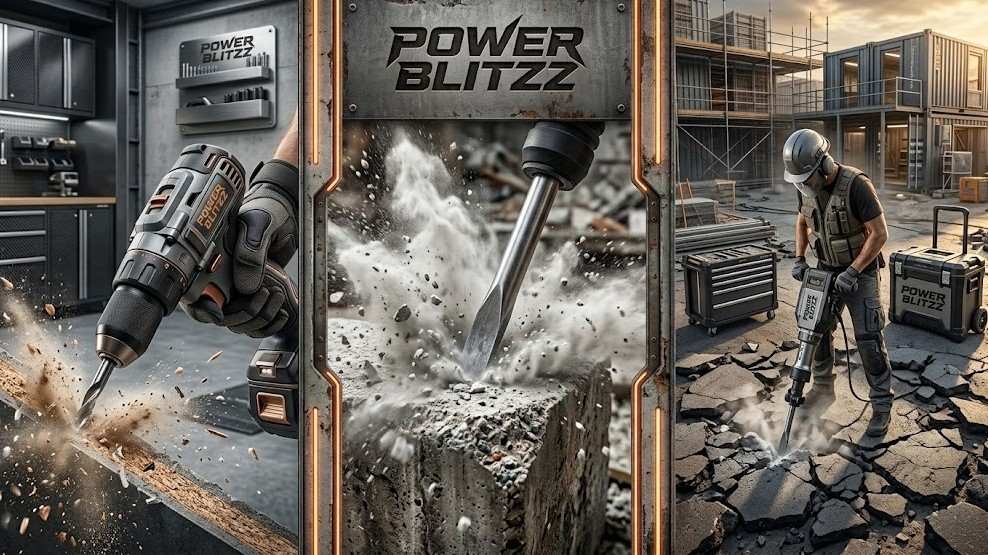
How to Choose the Right Demolition Hammer for Your Project
Choosing the right demolition hammer can make concrete breaking, tile removal, masonry work, and renovation projects faster and easier. However, not every demolition hammer is designed for the same job.
The best tool depends on the material you need to remove, the size of the project, required impact energy, hammer weight, power source, and how long the tool will be used.
Whether you are a professional contractor or handling a renovation project, understanding how to choose the best hammer helps you select the right combination of power, control, comfort, and durability.
What Is a Demolition Hammer?
A demolition hammer is a power tool designed primarily for breaking and removing hard materials such as concrete, brick, stone, masonry, asphalt, and tiles. Unlike a hammer drill, which combines drilling and hammering, a dedicated demolition hammer focuses on delivering repeated impact force.
Demolition hammers are available in several configurations, including electric demolition hammers, pneumatic jackhammers, and hydraulic demolition hammers. Each type is suitable for different applications, from small renovation jobs to heavy-duty construction and roadwork.
Before selecting a model, start by identifying the material and type of demolition work involved.
1. Identify the Material You Need to Remove
The material is one of the most important factors when selecting a demolition hammer.
For tile removal, plaster, and light masonry, a lightweight hammer with moderate impact energy is generally easier to control. A flat or tile chisel can help remove material without unnecessary damage to the surface underneath.
For brick walls, concrete floors, and general masonry demolition, a medium-duty demolition hammer can provide a good balance between power and maneuverability.
For thick concrete, foundations, reinforced concrete, and asphalt, a heavy-duty demolition hammer with higher impact energy may be necessary.
Using an oversized tool for light work can make precise demolition more difficult, while an underpowered tool may take longer to break hard materials.
2. Choose the Right Type of Demolition Hammer
The power source affects where and how a demolition hammer can be used.
Electric Demolition Hammer
An electric demolition hammer is a popular choice for construction, remodeling, and renovation projects. Corded models provide continuous power, while cordless demolition hammers offer greater mobility.
Electric models are commonly used for:
- Concrete floor breaking
- Tile and flooring removal
- Brick and masonry demolition
- Plaster removal
- Chipping concrete
- Small and medium renovation projects
For indoor applications and jobs where portability is important, an electric model can be a practical solution.
Pneumatic Jackhammer
A pneumatic jackhammer uses compressed air to generate repeated high-energy impacts. These tools are commonly used on construction sites for demanding concrete breaking, asphalt removal, roadwork, and other heavy-duty applications.
Because pneumatic hammers require an air compressor, they are generally more suitable for professional environments where compressed-air equipment is available.
Hydraulic Demolition Hammer
A hydraulic demolition hammer is normally mounted on excavators or other construction machinery. It is designed for large-scale applications such as foundation demolition, road construction, quarrying, and heavy concrete breaking.
Hydraulic breakers provide substantial impact power and are generally unnecessary for small renovation projects.
3. Check Impact Energy
One of the most important demolition hammer specifications is impact energy.
Impact energy is measured in joules (J) and indicates the amount of energy delivered by each blow. Generally, higher impact energy allows a hammer to tackle harder and thicker materials.
For light demolition, such as tile removal and surface chipping, excessive impact energy may reduce control. For concrete demolition and foundation work, higher impact energy becomes increasingly important.
Instead of choosing the hammer with the highest joule rating, match the impact energy to the material and application.
4. Consider Impact Rate
Another important specification is impact rate, commonly measured in blows per minute (BPM) or impacts per minute (IPM).
A higher impact rate means the tool can deliver more strikes over a given period. However, impact rate should be considered together with impact energy.
A hammer with a high BPM but insufficient impact energy may not perform effectively on thick concrete. Similarly, extremely high impact energy may be unnecessary for light materials.
The best demolition hammer balances impact force and impact frequency according to the job.
5. Choose the Correct Hammer Weight
Hammer weight affects both performance and operator comfort.
Lightweight demolition hammers are easier to maneuver and are suitable for tile removal, chipping, and work in confined spaces.
Medium-weight demolition hammers provide a useful balance between power and portability. They are often suitable for general construction, masonry, and concrete work.
Heavy demolition hammers are designed for demanding applications where maximum impact force is required, such as thick concrete and foundation demolition.
If you expect to work for several hours, do not overlook weight. A tool that is difficult to control can increase fatigue and reduce productivity.
6. Look for Vibration Control and Ergonomic Design
Demolition tools naturally produce vibration, particularly during prolonged concrete breaking. Choosing a model with anti-vibration technology and an ergonomic design can make extended operation more comfortable.
Useful features include:
- Anti-vibration handles
- Padded grips
- Adjustable side handles
- Balanced tool design
- Variable impact control
- Comfortable trigger placement
Good ergonomics help operators maintain better control while reducing unnecessary fatigue.
7. Select the Right Chisel
The right demolition hammer chisel can significantly affect performance.
A point chisel concentrates impact into a small area and is useful for penetrating hard materials and starting breaks.
A flat chisel spreads impact across a wider surface and is commonly used for general chipping and masonry work.
A tile removal chisel is designed to help separate tiles from floors and walls efficiently.
Before purchasing accessories, check the hammer’s tool holder and ensure that the chisel is compatible with the model. Common tool-holder systems include SDS-Max and hex configurations.
8. Match the Hammer to the Project Size
The scale of your project should determine how much demolition power you actually need.
For a small bathroom renovation involving tile removal, a compact electric demolition hammer is usually more practical than heavy construction equipment.
For medium-sized projects involving concrete floors, brick walls, and masonry, a medium-duty hammer can provide the necessary balance of power and control.
For large-scale concrete demolition, foundation removal, asphalt breaking, or roadwork, heavy-duty equipment such as pneumatic jackhammers or hydraulic breakers may be more appropriate.
If you only need the tool for a one-time project, demolition hammer rental can also be an economical alternative to purchasing specialized equipment.
9. Consider Durability and Maintenance
A demolition hammer experiences repeated impact, so durability is particularly important for professional and frequent users.
Before buying, check the availability of replacement parts, chisels, lubrication products, servicing, and warranty support.
Regular maintenance can also extend the life of the tool. Inspect the hammer before use, clean dust from ventilation areas, check the power cable or battery, inspect chisels for wear, and follow the manufacturer’s lubrication recommendations.
A well-maintained demolition hammer can provide more consistent performance and help reduce unexpected downtime.
10. Follow Demolition Hammer Safety Practices
Safety should always be considered when operating a demolition hammer. Breaking concrete, brick, and masonry can generate flying debris, dust, noise, and vibration.
Wear appropriate safety glasses, protective gloves, hearing protection, safety footwear, and respiratory protection when required.
Before starting work, inspect the area for electrical cables, pipes, structural hazards, and unstable materials. Maintain stable footing and use the hammer according to the manufacturer’s instructions.
For concrete and masonry demolition, effective dust control is also important to help reduce airborne particles.
Demolition Hammer Options for Different Jobs
For different construction requirements, Power Blitzz offers demolition hammers in multiple weight categories:
- 5 kg demolition hammer for heavy-duty concrete breaking and chiseling.
- 10 kg demolition hammer for concrete, masonry, and stone.
- 16 kg demolition hammer for demanding professional demolition work.
Choose the weight and power based on your material, workload, and project requirements.
Final Thoughts
Selecting the best demolition hammer for your project is about more than simply choosing the most powerful tool. Consider the material, impact energy, impact rate, weight, power source, chisel type, ergonomics, and project duration before making your decision.
For tile removal and renovation, a lightweight electric demolition hammer can provide excellent control. For concrete breaking and masonry work, a medium-duty model may offer the right balance of power and portability.
Contact Power Blitzz today to find the best demolition hammer for your job.

Popular Posts
November 8, 2023
November 14, 2023
November 28, 2023
December 4, 2023
December 13, 2023
Copyright © 2024 – Power Blitzz– All rights reserved.