
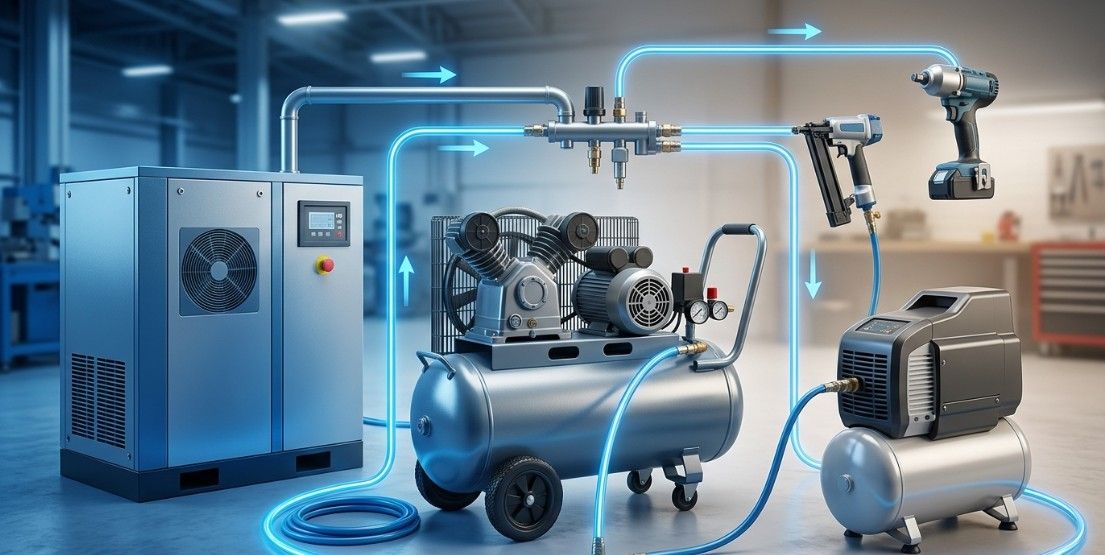
What I Found After 30 Days of Air Compressor Use
Air compressors are essential in many industrial and commercial settings, powering everything from pneumatic tools to manufacturing lines. While uptime and maintenance often get attention, energy consumption is a cost that is frequently overlooked.
To understand the real impact on electricity bills, I tracked the power usage of an industrial grade air compressor for 30 days. The goal was to uncover usage patterns, identify inefficiencies, and discover practical ways to save energy without compromising performance.
Why Energy Monitoring Matters for Air Compressors
Air compressors are notorious energy consumers. According to multiple industry studies, compressed air systems often account for 10 to 30 percent of a facility’s total electricity usage, sometimes even more in facilities with heavy pneumatic tool usage.
Yet many facilities do not monitor energy usage at all, operate compressors inefficiently, run machines at full load even during idle periods, or have leaks or pressure inefficiencies that waste power. Because of this, compressors can quietly inflate utility bills without anyone noticing until it is time to reconcile monthly costs.
The Setup: How I Collected the Data
To track real power use, I installed a power meter on the main feed to our primary industrial air compressor, a 30 HP rotary screw unit rated at 460V three phase.
Data Points Collected
Over 30 days, the system logged:
- Real time kW draw
- Run time
- Peak load periods
- Idle versus active consumption
- Daily and cumulative kWh usage
I also correlated this with operational schedules, shift patterns, weather impact because compressed air demand varies slightly with temperature, and maintenance activity. This was not a theoretical model, it was the real usage profile of a working compressor under real production conditions.
The Results: What the Data Revealed
1. Total Energy Consumption
Over the 30 day period, the compressor consumed 4,200 kWh of electricity. At our electricity rate of approximately $0.12 per kWh, that totals approximately $504 in power costs for one compressor in just one month. Across multiple compressors or year round operation, this easily becomes a major line item.
2. Daily Usage Patterns
Here is what the daily breakdown showed:
- Weekday peaks average 6 to 8 hours of high load per day
- Weekend usage only minimal operation, mostly idle runs
- Night shifts noticeable idle draw, the compressor still cycled even when demand was low
3. Idle Power Loss
One of the biggest eye openers was that even when output demand was minimal, the compressor continued running, drawing an average of 1.8 kW while idling. That means unnecessary energy usage during lunch breaks, night shifts, and low demand periods. Across 30 days, idle draw alone accounted for nearly 24 percent of total consumption.
4. Load versus Unload Efficiency
When the compressor was under full load, it operated at expected efficiency. But during light or intermittent demand, the energy cost per cubic foot of air increased drastically. Running under light loads is far less efficient than running at a steady, optimized pressure.
Key Insights and What They Mean
Insight # 1: Idle Consumption Is a Silent Cost
Idle draw, especially overnight and during breaks, was far higher than many operators anticipate. Even when demand was near zero, the compressor still cycled periodically to maintain pressure. Idle energy accounted for nearly a quarter of monthly power use. The solution is to consider installing an auto shutdown timer or variable speed drive.
Insight # 2: Load Management Matters
Energy efficiency drops when the compressor constantly cycles between load and unload states. This typically happens when demand is intermittent, such as during lunch breaks or low production hours. The solution is to use air receivers to smooth demand, allowing the compressor to run at optimal load before unloading.
Insight # 3: Controls and Scheduling Have Big Return on Investment
Simple schedule based controls that shut down during predictable low demand windows can significantly cut costs. Automated control systems that adjust output based on real time demand can further improve efficiency.
Insight # 4: Maintenance Reduces Waste
Leaks, worn valves, and suboptimal pressure settings drive up energy usage, often without operators realizing it. A quick audit revealed several small leaks, pressure setpoints higher than necessary, and a worn intake filter that increased load. Fixing these reduced required run time and lowered consumption.
Recommended Efficiency Improvements
Based on the findings, here is what we implemented next.
Installed a Variable Speed Drive
VSD compressors adjust motor speed to match air demand, eliminating wasteful cycling and reducing idle power. Projected energy savings are 15 to 30 percent annually.
Scheduled Auto Shutdown Controls
During known low demand windows such as nights and weekends, the compressor now enters a true standby mode.
Air Leak Audits
We now conduct quarterly leak inspections. Even small leaks add up, every 2 to 3 psi of pressure loss can increase energy consumption by approximately one percent.
Pressure Setpoint Review
We reduced system pressure by a few psi where safe to do so, saving energy without affecting production.
Takeaway: Action Steps You Can Do Now
Whether you are a facilities manager, production engineer, or business owner, you can start improving compressor efficiency immediately.
- Install a power meter on your compressor feed.
- Monitor usage for at least 14 to 30 days to understand real patterns.
- Identify idle usage and demand cycles.
- Use controls and scheduling to avoid unnecessary operation.
- Fix leaks and optimize pressure.
- Consider VSD technology for long term savings.
If you would like help analyzing your own compressor energy usage or implementing any of these strategies, feel free to ask, I would be happy to assist.
AI Overview
This blog tracks air compressor power usage over 30 days, uncovering actual energy consumption, hidden inefficiencies, and cost drivers. It also highlights practical strategies to reduce electricity usage, optimize performance, and improve overall system efficiency.
FAQs
How long can a compressor run continuously?
Most industrial air compressors can run continuously if properly maintained and cooled. However, duty cycle and cooling system efficiency determine safe long term operation.
Does an air compressor use a lot of electricity?
Yes, air compressors are energy intensive and can account for a significant portion of facility power usage. Inefficiencies like leaks and idle running can further increase consumption.
How to calculate air compressor usage?
You can calculate usage by multiplying power rating in kW by operating hours. This gives total kWh consumed over a specific period.
How many CFM is in 1 kW?
There is no fixed conversion since CFM depends on compressor efficiency and pressure. On average, 1 kW produces around 4 to 5 CFM in typical systems.
Final Thoughts: What This Means for Your Facility
Tracking air compressor power usage for 30 days provided clear, data driven insights into how energy is consumed and where inefficiencies occur. From idle losses to load fluctuations, even small operational gaps can lead to significant cost increases over time.
By implementing simple improvements such as better scheduling, leak management, and optimized pressure settings, businesses can reduce electricity costs while improving overall system performance and reliability.
Buy Equipment or Ask for a Service
When you are ready to optimize your compressed air system, it is important to work with trusted air compressor suppliers like Power Blitz who understand real world performance and efficiency. You can explore reliable equipment options or request expert services tailored to your operational needs.
By connecting with Power Blitzz customer service, you can get professional guidance, competitive quotations, and access to high quality solutions that help you make the right investment decision.
Keep Reading More Air Compressor Guides
- How UAE Weather Affects Air Compressor Performance: Impact of heat, dust, and humidity.
- Top Applications of Air Compressors in UAE Construction: Where compressors are used on-site.
- Best Air Compressor for Spray Painting in UAE Workshops: Best picks for smooth finishing.
- 7 Benefits of Silent Air Compressor in the Workplace: Why quiet compressors matter.
- The 7 Best Air Compressors of 2026: An Ultimate Guide: Expert picks that deliver power, efficiency, and reliability in 2026.

Popular Posts
November 8, 2023
November 14, 2023
November 28, 2023
December 4, 2023
December 13, 2023
Copyright © 2024 – Power Blitzz– All rights reserved.