
Different Types of Drilling Machines and Their Uses
Types of drilling machines you choose decide hole accuracy, job speed, and tool life. A hand drill that handles timber stalls in reinforced concrete, and a drill press cannot travel to a rooftop.
This guide explains each machine, where it is used, and how to match it to your work.
Table of Contents
- What Are the Different Types of Drilling Machines?
- How Do Portable Drilling Machines Work and Where Are They Used?
- Which Stationary Drilling Machines Are Used in Workshops and Factories?
- What Are the Applications of Drilling Machines by Industry?
- How Do You Choose the Right Drilling Machine?
- What Safety Risks Come With Drilling Machines?
- How Do You Maintain a Drilling Machine?
- Final Thoughts
- FAQ
What Are the Different Types of Drilling Machines?
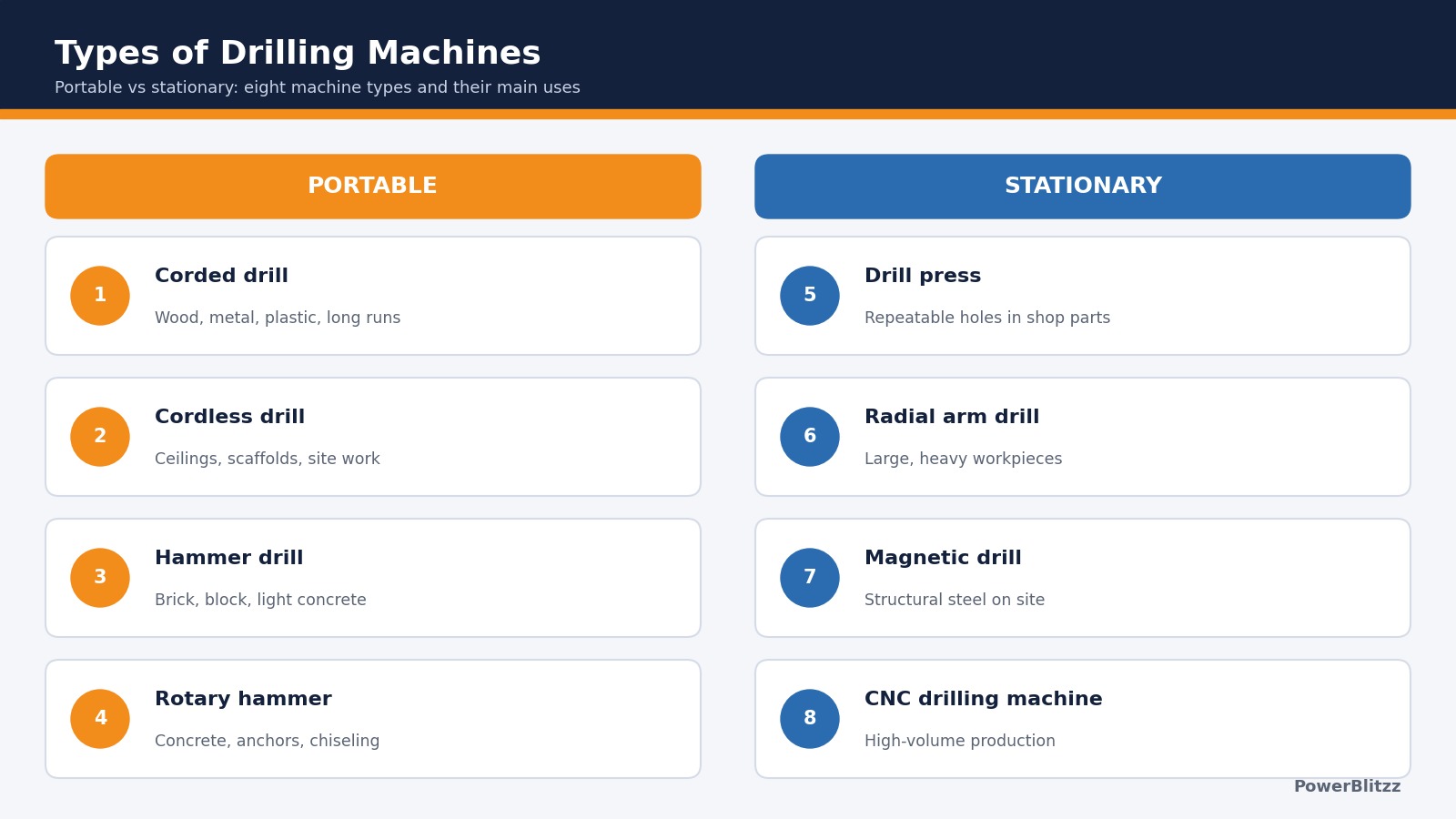
The main types of drilling machines are hand drills, cordless drills, hammer drills, rotary hammers, drill presses, radial arm drills, magnetic drills, and CNC drilling machines. They differ in power source, impact action, precision, and portability, so the right type depends on your material, hole size, and workload.
Every drill converts motor rotation into torque at the spindle, and the chuck holds the bit. Three specifications define performance: no-load RPM, torque, and chuck capacity.
Impact mechanisms add axial force for masonry. Stationary designs add rigidity, which reduces spindle runout and improves accuracy.
How Do Portable Drilling Machines Work and Where Are They Used?
Portable drilling machines include corded drills, cordless drills, hammer drills, and rotary hammers. They travel to the workpiece, which makes them ideal for construction sites, installations, and repairs. Drill-drivers suit wood and metal, hammer drills suit brick, and rotary hammers suit concrete.
Should You Choose a Corded or Cordless Drill?
Corded drills deliver continuous power for long, repetitive jobs, while cordless drills trade runtime for mobility. Choose corded for workshop production and cordless for ceilings, scaffolds, and remote sites. Brushless cordless models now match corded torque for most wood, steel, and light masonry work.
Runtime depends on battery capacity in amp-hours. Crews that drill all day should carry spare packs and standardize on one battery platform.
When Should You Use a Hammer Drill or a Rotary Hammer?
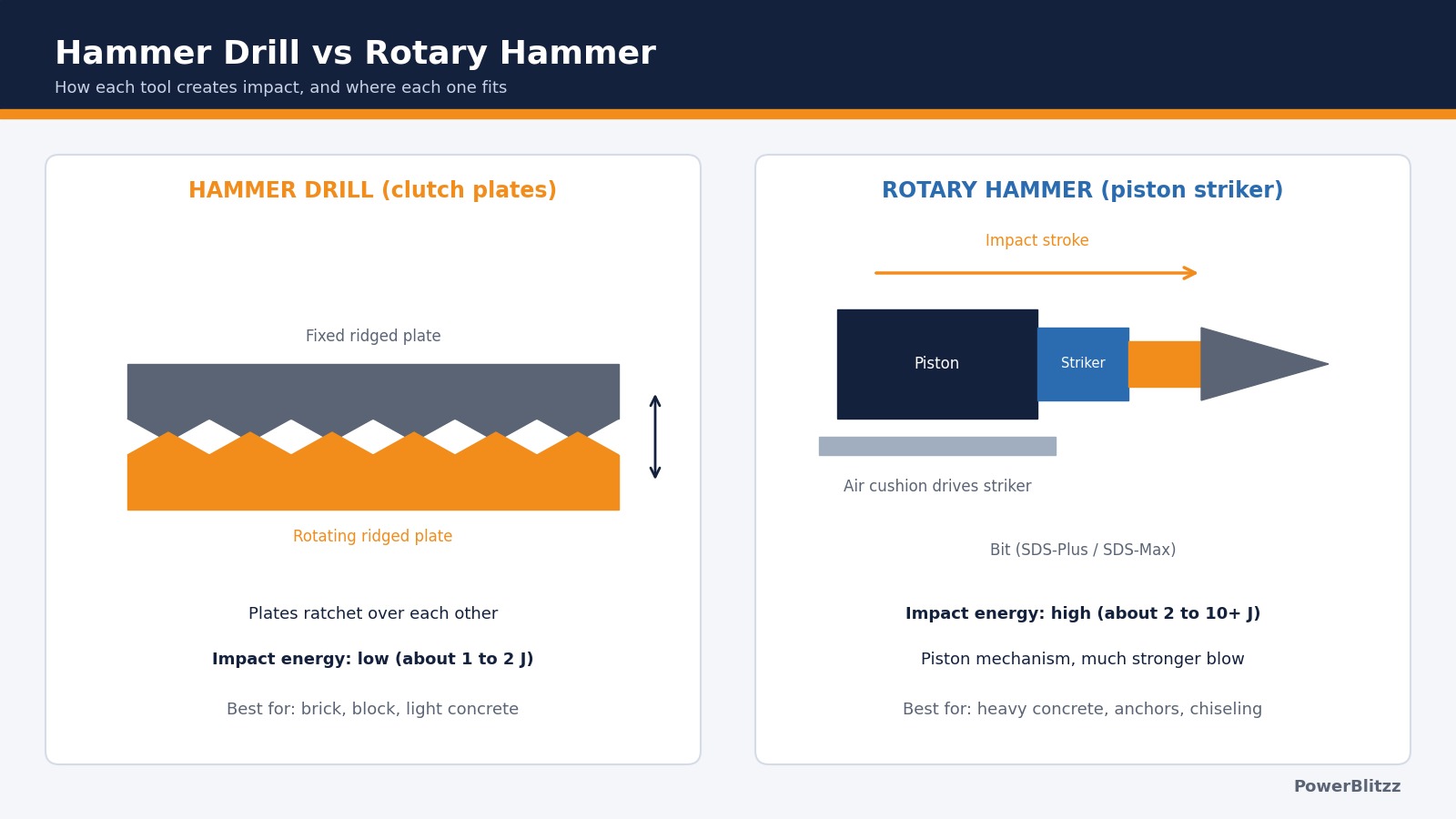
Use a hammer drill for brick, block, and light concrete, and a rotary hammer for heavy concrete and repeated anchor holes. A hammer drill uses clutch-style plates for impact, while a rotary hammer uses a piston mechanism that delivers much higher impact energy, measured in joules.
Rotary hammers use SDS-Plus or SDS-Max shanks. SDS-Plus suits holes up to about 26 mm, while SDS-Max handles larger cores and chiseling.
Which Stationary Drilling Machines Are Used in Workshops and Factories?
Stationary drilling machines include drill presses, radial arm drills, magnetic drills, and CNC units. A rigid column or base controls feed and alignment, which keeps bit angle accurate, reduces runout, and handles thicker material than handheld tools. They suit workshops, fabrication yards, and factories.
What Is a Drill Press Best Used For?
A drill press produces accurate, repeatable holes at a fixed angle in wood, metal, and plastic. Adjustable speed, a depth stop, and a worktable let operators match RPM to material and drill identical holes without layout drift. It is the standard choice for furniture, jigs, and machined parts.
Always clamp the workpiece. A part that grabs the bit and spins is a common drill press injury.
Where Do Radial Arm, Magnetic, and CNC Drilling Machines Fit?
Radial arm drills move the drill head along an arm to reach large, heavy workpieces, while magnetic drills clamp to steel with an electromagnet for on-site holes in beams and plates. CNC drilling machines program hole positions and depths for consistent high-volume output.
Magnetic drills use annular cutters, which remove a ring of material instead of grinding the full hole. This cuts faster and needs less power than a twist bit of the same diameter.
| Machine Type | Best For | Precision | Portability |
|---|---|---|---|
| Corded Hand Drill | Wood, metal, plastic, long runs | Medium | Medium |
| Cordless Drill | Ceilings, scaffolds, site work | Medium | High |
| Hammer Drill | Brick, block, light concrete | Medium | High |
| Rotary Hammer | Concrete, anchors, chiseling | Medium | Medium-High |
| Drill Press | Repeatable holes in shop parts | High | Low |
| Radial Arm Drill | Large, heavy workpieces | High | Very Low |
| Magnetic Drill | Structural steel on site | High | Medium |
| CNC Drilling Machine | High-volume production | Very High | Fixed |
Need help choosing the right power drill or hammer drill?
Compare power ratings, chuck types, and impact energy to find the right tool for your application. Browse our power drills and hammer drills collection, then check each model against the selection checklist in the next sections.
What Are the Applications of Drilling Machines by Industry?
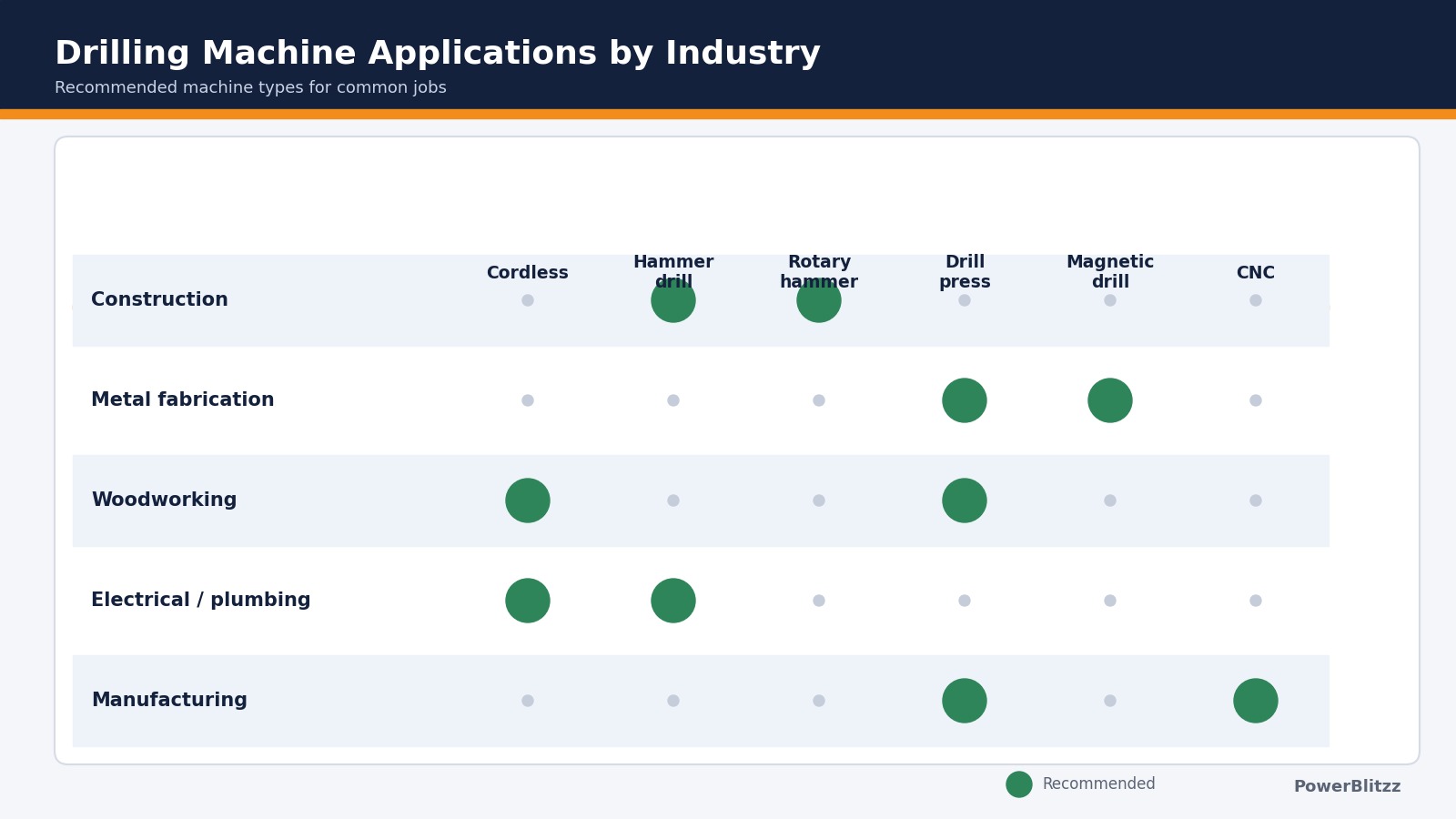
Drilling machines are used in construction, metal fabrication, woodworking, automotive repair, electrical installation, and plumbing. Construction relies on rotary hammers for anchors, fabrication uses magnetic and radial drills for steel, and woodworking uses drill presses for joinery, so the application decides the machine type.
Common pairings in practice:
- Construction: Rotary hammers for anchor bolts, hammer drills for brick fixings.
- Metal fabrication: Magnetic drills for beams, drill presses for plate and brackets.
- Woodworking: Drill presses for dowels, cordless drills for assembly.
- Electrical and plumbing: Cordless drills and hammer drills for conduit, pipe sleeves, and wall penetrations.
- Manufacturing: CNC and gang drilling machines for repeatable patterns.
How Do You Choose the Right Drilling Machine?
Choose a drilling machine by matching three variables: workpiece material, hole diameter and depth, and duty cycle. Material sets the drive and bit type, size sets torque and chuck capacity, and duty cycle decides between cordless convenience and corded or stationary endurance. Power access and accuracy tolerance then refine the shortlist.
Use this Material-Hole-Duty (MHD) Matrix before buying:
- Material: Wood and plastic need high RPM. Steel needs low RPM with cutting fluid. Concrete needs impact action.
- Hole size and depth: Larger diameters demand more torque, plus a side handle or fixed column.
- Duty cycle: Occasional use favors cordless. All-day production favors corded or stationary units.
- Power access: Remote sites favor batteries. Fixed workshops favor mains power.
- Accuracy tolerance: Anchor holes tolerate variance. Dowel joints and machined parts do not.
What Safety Risks Come With Drilling Machines?
The main safety risks are bit binding, kickback, overheating, unclamped workpieces, and silica dust from masonry drilling. Binding twists the tool against the operator, while overheating ruins bit temper and burns out motors. Side handles, clamps, sharp bits, and dust extraction control most of these risks.
A typical site scenario: a hammer drill hits rebar inside a slab, the bit locks, and the tool body twists against the wrist. A side handle, a slip clutch, and a switch to a rotary hammer with the right bit prevent most of these incidents.
Core controls to apply:
- Clamp every workpiece and never hold small parts by hand.
- Use sharp, correctly rated bits and clear chips often.
- Fit dust extraction when drilling concrete and follow OSHA silica guidance.
- Review OSHA machine guarding requirements before operating stationary units.
How Do You Maintain a Drilling Machine?
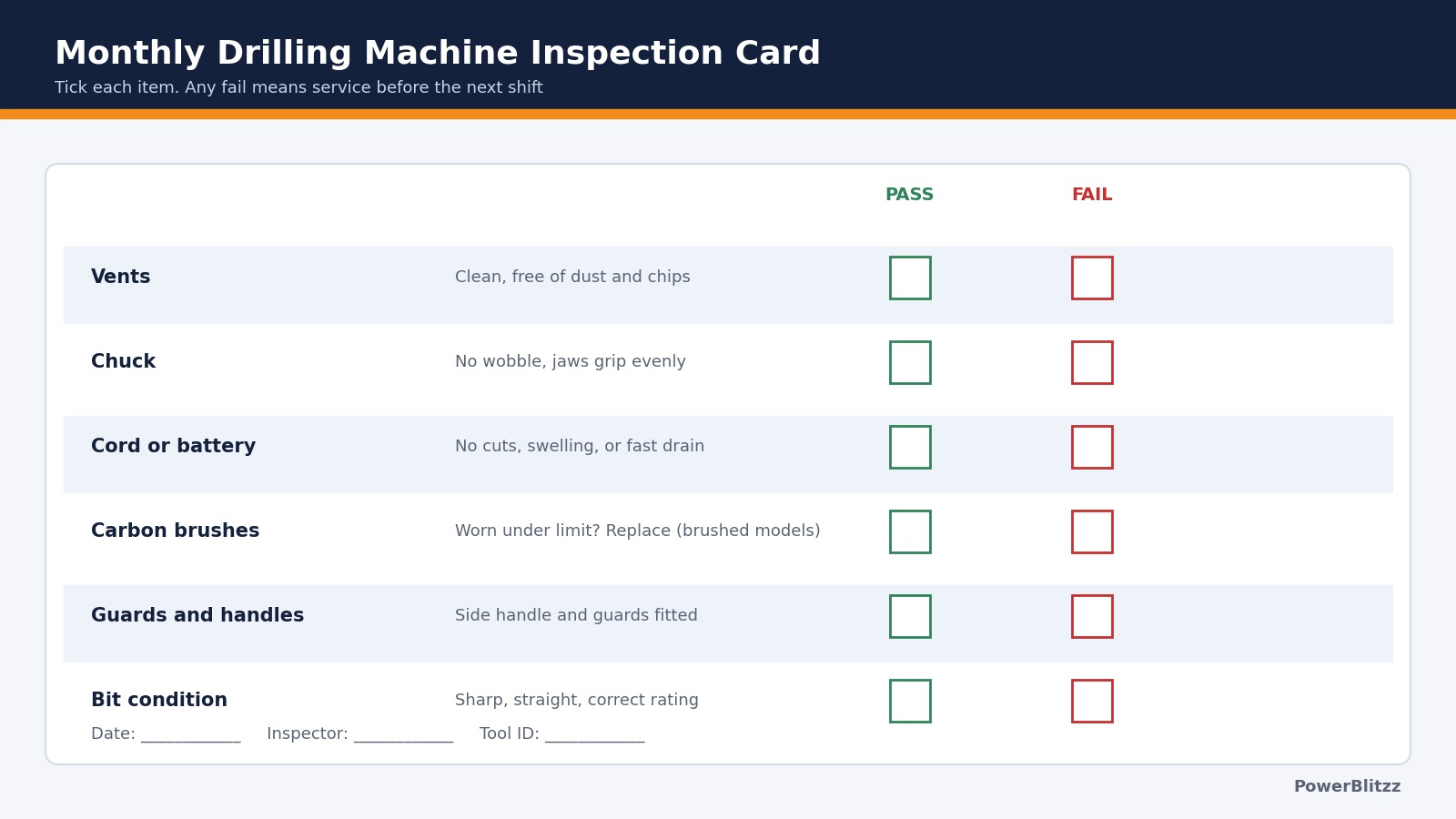
Maintain a drilling machine by cleaning vents, checking carbon brushes, lubricating the chuck, inspecting cords or batteries, and replacing dull bits. A monthly inspection catches most failures early and keeps torque and spindle runout within normal limits. Replace worn parts before they cause overheating.
Watch for three warning signs: a wobbling chuck, a burning smell under normal load, and batteries that lose charge unusually fast. Any one of them means the tool needs service before the next shift.
Keep spare chucks, bits, and batteries on hand so downtime stays short. A dependable power tools supplier makes sourcing these replacements simpler.
Final Thoughts
Choosing the right drilling machine depends on the material, hole size, and frequency of use. Cordless and hammer drills suit most on-site tasks, while rotary hammers handle heavy-duty concrete drilling and stationary machines deliver greater precision.
As a trusted Drilling Machine Supplier in Dubai, Power Blitzz offers solutions for diverse project requirements, helping businesses select suitable equipment for reliable performance and long-term use.
Find the Right Drilling Machine for Your Project
Need help choosing a drilling machine or placing a bulk order? Get expert recommendations based on your materials, drilling requirements, and workload.
FAQ
Which type of drilling machine is best for home use?
A cordless drill-driver is best for most home use because it drills wood, metal, and plastic and drives screws without cords. Add a hammer drill function if you regularly drill brick or concrete. A small bench drill press helps if you build furniture or shelving.
What is the difference between a hand drill and a drill press?
A hand drill is portable and relies on the operator to hold angle and pressure, while a drill press is fixed and guides the bit through a rigid column. The drill press makes straighter, more repeatable holes. The hand drill works where the workpiece cannot move.
How do I choose the right drill speed for different materials?
Use higher RPM for small bits in wood and soft materials, and lower RPM for large bits and hard materials such as steel. Larger diameters travel faster at the rim and generate more heat, so slower speed protects the bit. Apply cutting fluid on metal.

Popular Posts
November 8, 2023
November 14, 2023
November 28, 2023
December 4, 2023
December 13, 2023
Copyright © 2024 – Power Blitzz– All rights reserved.