
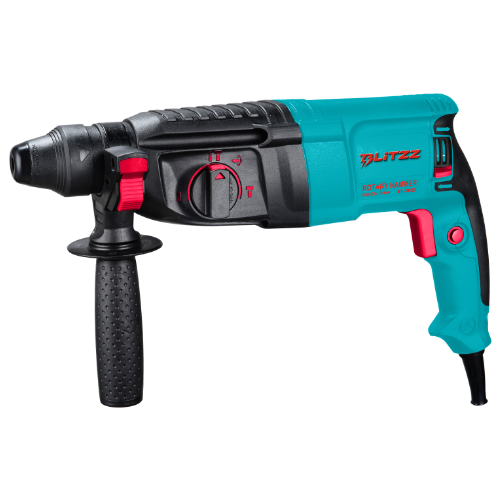
Rotary Hammer Explained: Uses and Working Guide
When it comes to drilling through concrete, brick, stone, or reinforced masonry, a standard drill simply isn’t powerful enough. That’s where a rotary hammer comes in. Designed for heavy-duty drilling, chiseling, and light demolition, a rotary hammer delivers powerful impact energy that makes tough construction jobs faster, safer, and more efficient.
Whether you’re installing anchor bolts, drilling holes for plumbing and electrical conduits, removing tiles, or breaking concrete, choosing the right rotary hammer drill can significantly improve productivity while reducing operator fatigue.
In this guide, you’ll learn what a rotary hammer is, how it works, its key features, common applications, and how to choose the right model for your construction or industrial project.
What Is a Rotary Hammer?
A rotary hammer, also known as a rotary hammer drill, is a heavy-duty power tool designed to drill, hammer, and chisel hard materials such as concrete, brick, masonry, natural stone, and reinforced concrete.
Unlike a standard drill or hammer drill, a rotary hammer combines rotary motion with a powerful electro-pneumatic hammering mechanism. This piston-driven system delivers significantly greater impact energy, allowing the drill bit to break through dense materials quickly while requiring less physical effort from the user.
Most rotary hammers offer three operating modes:
- Drill Mode for wood and metal drilling
- Hammer Drill Mode for drilling concrete and masonry
- Hammer-Only Mode for chiseling and light demolition
Because of this versatility, rotary hammers are widely used in construction, infrastructure projects, industrial maintenance, electrical installation, plumbing, and renovation work.
How Does a Rotary Hammer Work?
The working principle of a rotary hammer is based on an electro-pneumatic impact mechanism. An electric motor drives a piston inside the tool, creating compressed air that powers a second piston. This piston delivers rapid, high-impact blows to the drill bit while it rotates.
Unlike a traditional hammer drill that relies on mechanical gears, this pneumatic system produces much greater impact force with less vibration.
The combination of:
- Rotary motion
- High-impact hammering
- Efficient power transfer
allows the tool to drill through extremely hard materials quickly and accurately.
Rotary Hammer vs Hammer Drill
Although these tools may appear similar, they are designed for different applications.
| Feature | Rotary Hammer | Hammer Drill |
|---|---|---|
| Impact Mechanism | Electro-pneumatic piston | Mechanical cam action |
| Drilling Power | High | Moderate |
| Best Materials | Concrete, stone, masonry | Brick, wood, light concrete |
| Chiseling Function | Yes | No |
| Hole Size | Large diameter holes | Small to medium holes |
| Professional Use | Heavy-duty construction | General DIY and light construction |
If your work regularly involves reinforced concrete, masonry, or demolition, a rotary hammer is the better choice.
Main Components of a Rotary Hammer
Understanding the main parts helps you choose the right tool.
Powerful Motor
Provides the torque required for demanding drilling applications.
Electro-Pneumatic Hammer Mechanism
Generates powerful impact energy for breaking concrete and stone.
SDS Chuck System
Most rotary hammers use SDS Plus or SDS Max chucks, allowing drill bits and chisels to lock securely while moving freely for efficient hammering.
Variable Speed Trigger
Allows greater drilling precision across different materials.
Slip Clutch
Protects both the operator and the tool by preventing sudden torque reactions if the drill bit jams.
Anti-Vibration System
Reduces operator fatigue during prolonged use.
What Is a Rotary Hammer Used For?
Rotary hammers are among the most versatile power tools used on construction sites.
Concrete Drilling
Ideal for drilling anchor holes, expansion bolts, rebar installations, and structural fixings.
Masonry Drilling
Quickly drills through:
- Brick
- Concrete blocks
- Stone
- Cement walls
Demolition Work
Using flat or point chisels, rotary hammers can remove:
- Floor tiles
- Wall tiles
- Plaster
- Concrete sections
- Mortar
Electrical and Plumbing Installation
Perfect for creating openings for:
- Electrical conduits
- Cable routes
- Water pipes
- HVAC systems
Surface Preparation
Used to remove damaged concrete and prepare surfaces before repair or renovation.
Industries That Use Rotary Hammers
Rotary hammers are widely used across many industries, including:
- Construction
- Civil engineering
- Infrastructure development
- Building maintenance
- Industrial maintenance
- Mechanical installation
- Electrical contracting
- Plumbing
- Road construction
- Renovation and remodeling
Types of Rotary Hammers
Corded Rotary Hammer
Corded models provide continuous power, making them ideal for demanding industrial and construction applications.
Best for
- Continuous heavy-duty work
- Large construction sites
- High-performance drilling
Cordless Rotary Hammer
Powered by rechargeable lithium-ion batteries, cordless rotary hammers offer greater mobility without sacrificing performance.
Best for
- Maintenance work
- Remote job sites
- Indoor applications
- Service technicians
SDS Plus Rotary Hammer
SDS Plus rotary hammers are lightweight and commonly used for medium-duty drilling.
Suitable for:
- Anchor installation
- Masonry drilling
- Electrical work
- Plumbing installation
SDS Max Rotary Hammer
SDS Max models deliver higher impact energy for demanding applications.
Suitable for:
- Large concrete holes
- Heavy demolition
- Industrial construction
- Structural work
Benefits of Using a Rotary Hammer
Choosing the right rotary hammer provides several advantages.
- Faster drilling through concrete and masonry
- Higher impact energy than standard hammer drills
- Reduced operator fatigue
- Accurate drilling performance
- Multiple operating modes
- Excellent durability
- Increased productivity
- Lower maintenance requirements
- Suitable for drilling, chiseling, and demolition
How to Choose the Right Rotary Hammer
Before purchasing a rotary hammer, consider the following factors.
Material
Determine whether you’ll drill:
- Concrete
- Brick
- Stone
- Reinforced concrete
- Masonry
Power
Higher wattage or voltage delivers greater drilling performance.
Impact Energy
Higher impact energy is recommended for heavy-duty demolition and concrete drilling.
Chuck Type
- SDS Plus for general construction
- SDS Max for industrial applications
Corded or Cordless
Choose based on mobility requirements and job duration.
Safety Features
Look for:
- Slip clutch
- Anti-vibration technology
- Variable speed control
- Overload protection
Rotary Hammer Safety Tips
Safe operation improves productivity while reducing accidents.
- Wear safety goggles, gloves, and hearing protection.
- Inspect drill bits before use.
- Secure the workpiece whenever possible.
- Use the correct drill bit for the material.
- Avoid applying excessive force.
- Disconnect power before changing accessories.
- Follow the manufacturer’s operating instructions.
Maintenance Tips
Proper maintenance extends the service life of your rotary hammer.
- Clean dust after every use.
- Lubricate SDS shanks when recommended.
- Inspect power cords or batteries.
- Replace worn drill bits promptly.
- Check ventilation openings regularly.
- Store the tool in a dry environment.
Routine maintenance ensures consistent performance and reduces repair costs.
Conclusion
A rotary hammer is an essential power tool for professionals who regularly work with concrete, masonry, brick, and stone. Its powerful electro-pneumatic hammering mechanism, combined with rotary drilling and chiseling capabilities, makes it the preferred choice for construction, demolition, renovation, and industrial maintenance.
Whether you’re drilling anchor holes, installing utilities, or breaking concrete, selecting the right rotary hammer improves efficiency, accuracy, and job site productivity.
Looking for High-Performance Rotary Hammers?
At Power Blitzz, we supply premium-quality rotary hammers, hammer drills, demolition hammers, SDS Plus and SDS Max accessories, and professional power tools for construction, industrial, and maintenance applications across the UAE.
Contact our team today to find the right rotary hammer for your project and achieve reliable performance on every job.

Popular Posts
November 8, 2023
November 14, 2023
November 28, 2023
December 4, 2023
December 13, 2023
Copyright © 2024 – Power Blitzz– All rights reserved.