
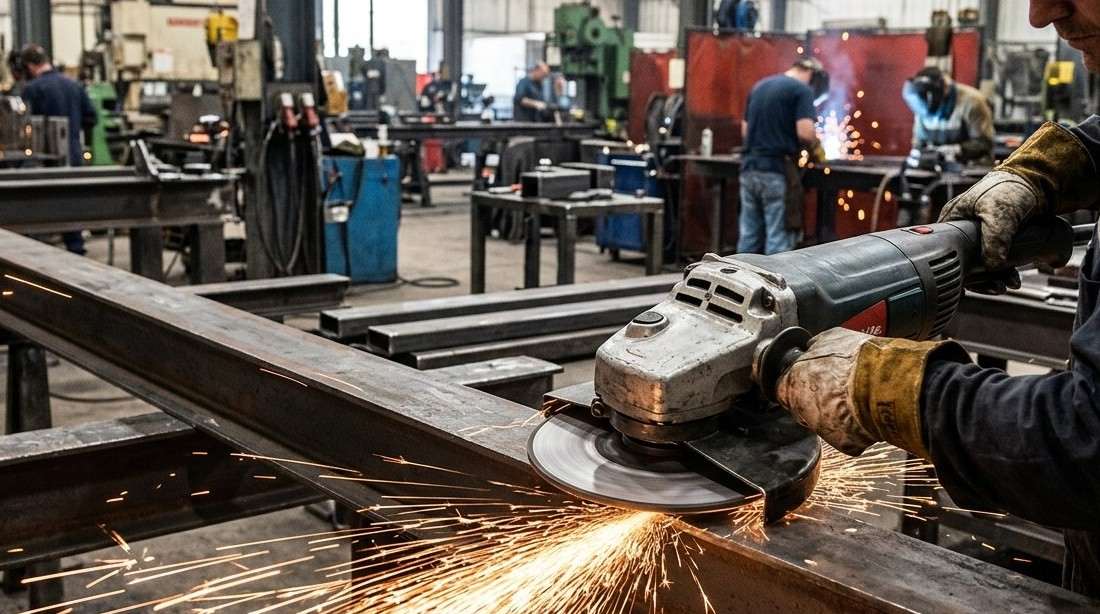
How to Extend the Life of an Industrial Angle Grinder
Most angle grinders do not fail because the work was too heavy. They fail because small things got ignored for too long. A vent that stayed clogged for weeks. A disc that was never checked before mounting. A gearbox that ran dry because nobody thought to grease it. None of these feel serious on their own day, yet together they are the reason a grinder that should last five years barely makes it past eighteen months.
The part that surprises most buyers is how little effort real protection takes. A few consistent habits, done every week, can double or triple how long an industrial angle grinder stays productive on site.
Why Angle Grinder Maintenance Matters on Site
An angle grinder works under constant vibration, heat and dust exposure. In construction, metal fabrication and stone cutting environments, this stress adds up fast. Skipping maintenance does not just shorten the tool’s life, it also increases the risk of mid job breakdowns, uneven cuts and safety incidents from a worn disc or loose guard.
Treating the grinder as a managed tool rather than something you replace when it dies changes the entire cost picture. Sourcing a well built machine from a reliable range of angle grinder machines in UAE is the first step, since ten minutes of care each week is far cheaper than an emergency replacement in the middle of a project.
Clean the Grinder After Every Shift
Dust and metal grit do more damage than most operators realize. They work their way into the motor housing, block the air vents and slowly grind down internal components while the tool keeps running.
- Blow out the vents and motor housing with compressed air at the end of every shift
- Wipe the body dry so moisture near the cord and motor does not cause corrosion
- Clear the disc collar and guard area where residue tends to pack in the tightest
This single habit alone prevents a large share of the overheating problems operators deal with in daily use.
Check the Disc Before Every Job
A cracked or mismatched disc puts extra strain on the motor and creates a real safety hazard. This is one step that should never be skipped, no matter how rushed the job is.
- Inspect every disc for hairline cracks before mounting it
- Match the disc type to the material being cut, since a wrong disc wears out twice as fast
- Check the expiry date printed on abrasive wheels, as heat and humidity shorten their shelf life
Understanding the different common uses of an angle grinder also helps operators pick the right disc and technique for the job at hand, which reduces unnecessary wear.
Lubricate the Gearbox on a Fixed Schedule
The gearbox absorbs more mechanical stress than any other part of the tool. Running it dry, even for a short period, is one of the fastest ways to shorten a grinder’s working life.
- Follow the manufacturer’s lubrication interval instead of waiting for grinding noise to appear
- Use only the grease grade recommended for the model, since the wrong grease breaks down quickly under heat
- Stop and inspect the tool immediately if you hear unusual gear sounds during operation
Neglected Grinder Versus Well Maintained Grinder
| Factor | Neglected Grinder | Well Maintained Grinder |
|---|---|---|
| Motor Heat | Overheats often | Stays within safe range |
| Disc Wear | Uneven and fast | Consistent and predictable |
| Gearbox Condition | Dry with seizure risk | Lubricated and smooth |
| Guard Condition | Cracked or ignored | Checked regularly |
| Typical Service Life | One to two years | Four to six years or more |
Watch the Carbon Brushes and Motor Armature Too
The motor is where most grinder failures actually start, yet it is the part operators check the least. Carbon brushes wear down with regular use and directly affect power delivery, while sparking, weak output or heat near the motor casing usually points to a deeper issue. Getting familiar with power tools armature basics makes it much easier to spot this kind of trouble early instead of waiting for the motor to fail completely.
Catching a worn brush or a failing armature early is far cheaper than replacing the whole motor assembly later.
Store the Tool the Right Way
How a grinder is stored between uses matters almost as much as how it is used. A tool left on a dusty workshop floor or exposed to humidity will degrade even without being switched on.
- Keep the grinder in a dry, dust free space rather than the floor
- Remove the disc before long term storage to avoid stress on the spindle
- Wrap the power cord loosely to prevent internal wire damage over time
Operators who also review safe use guidelines for angle grinders tend to store and handle their tools with more care overall, which naturally extends the working life of the machine.
Choose a Grinder That Is Worth Maintaining
No amount of care can fix a tool that was poorly built from the start. Sourcing the right machine is really the first step of any maintenance plan, not a separate decision. If you are still deciding on specifications, this guide on how to choose the right angle grinder walks through disc size, wattage and power source in detail.
Look for these qualities when sourcing a grinder for long term industrial use.
- Heat dissipating motor design and reinforced gear housing
- Components that are easy to service or replace in the field
- A supplier who offers genuine spare parts and after sales support
- Clear specifications matched to your actual workload, not just the lowest price
Suggested Maintenance Schedule
| Task | Recommended Frequency |
|---|---|
| Clean Vents and Housing | After every shift |
| Inspect Disc and Guard | Before every job |
| Check Power Cord and Switch | Weekly |
| Lubricate Gearbox | As per manufacturer interval |
| Full Service Check | Every three months |
Common Mistakes That Shorten Grinder Life
A few habits quietly reduce the lifespan of even a good quality grinder. Being aware of these patterns, along with understanding what actually drives grinder pricing and specifications, makes it much easier to budget for a tool that performs reliably over its full working life.
- Forcing the tool through material instead of letting the disc do the work
- Ignoring vibration or grinding noise until the tool stops working
- Using a disc rated for the wrong material just because it is available
- Skipping storage steps because the next job starts the same day
- Buying based on price alone without checking build quality or specifications
Conclusion
An industrial angle grinder does not have a fixed lifespan, it has a maintenance determined one. Clean it after every shift, check the disc before every job, keep the gearbox lubricated and store it properly, and a quality machine will keep performing for years longer than a neglected one.
Looking for a trusted power tools supplier in the UAE? Power Blitzz offers a reliable range of angle grinder machines in UAE built for efficient long term performance. Contact Power Blitzz today to get expert guidance on choosing and maintaining the right tool for your needs.
Keep Reading More Guides
- How to Choose the Right Submersible Water Pump: Learn how to size and select a submersible pump correctly.
- Complete Guide to Air Compressor Maintenance Tips: Simple upkeep habits that keep motors running efficiently.
- How to Choose Energy-Efficient Power Tools for Sustainable Construction in Abu Dhabi: See how smarter equipment choices lower long term power costs.
- Industrial vs Commercial Generators: What’s the Difference?: Compare backup power options for continuous pump operation.
- Complete Guide to Choosing Reliable Petrol Generator Suppliers in UAE: Find dependable backup power sources for your pump systems.

Popular Posts
November 8, 2023
November 14, 2023
November 28, 2023
December 4, 2023
December 13, 2023
Copyright © 2024 – Power Blitzz– All rights reserved.