
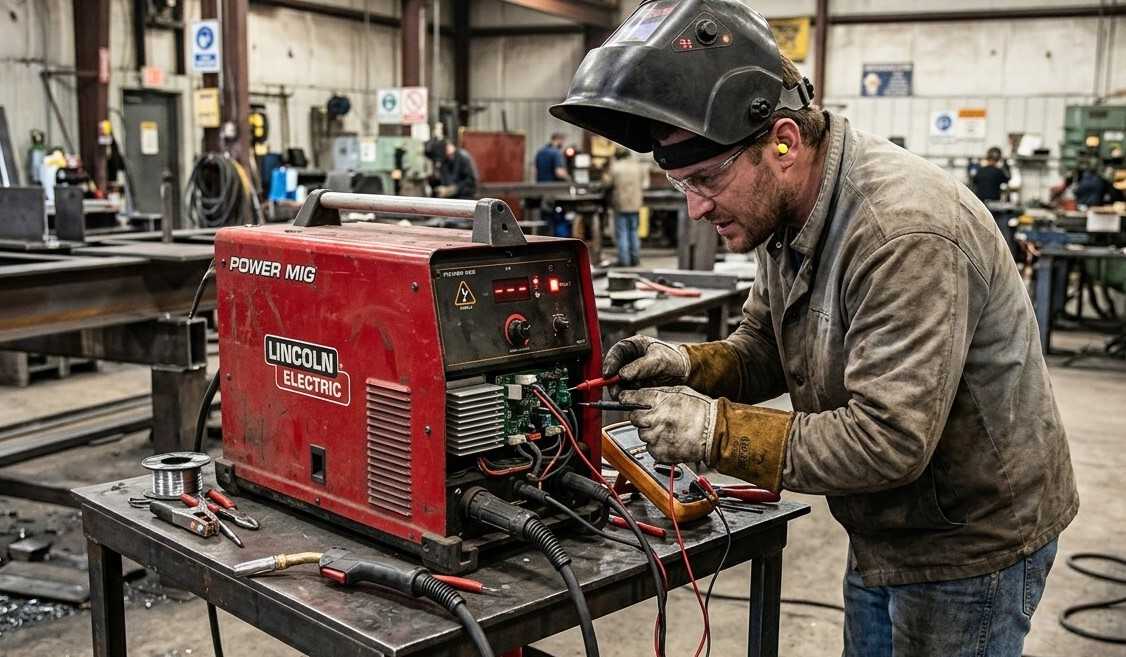
How to Identify and Prevent 5 Common Welding Machine Faults
A welding machine is only as good as the current running through it and the care it gets between jobs. Even experienced welders run into faults that slow down a project or ruin a weld that took hours to prepare. The good news is that most of these faults follow a pattern. Once you know what to look for, you can usually trace a bad weld or a sudden shutdown back to one of a handful of causes.
This guide walks through the five faults that show up most often in workshops, why they happen, and what actually fixes them. Whether you run a MIG welder on a production line or a stick welder for site repairs, the same basic principles apply.
1. Unstable Arc or Arc That Won’t Start
An arc that flickers, breaks, or refuses to strike is one of the most frustrating problems a welder can face. It usually points to something simple rather than a machine failure.
The most common causes are
- A loose or poorly attached ground clamp that isn’t making solid contact with bare metal
- Wrong current or voltage settings for the material thickness
- Damp electrodes or a clogged wire feed
- Low or unstable input voltage from the power supply
Start by checking the ground connection first, since this single issue causes more arc problems than any other factor. Clean the clamp point down to bare metal, tighten every cable connection, and confirm the voltage settings match the material you are welding. If the arc still won’t stabilize, test the electrode or wire for moisture and check the incoming power supply with a multimeter.
2. Porosity in the Weld Seam
Porosity shows up as tiny pinholes or pockets inside the weld, and it weakens the joint even when the surface looks fine. It happens when gas gets trapped in the weld pool as it cools.
Common triggers include
- Low shielding gas flow or an empty gas cylinder
- Wind or drafts blowing the shielding gas away from the weld
- Dirty base metal covered in oil, rust, or moisture
- Damp welding rods or wire
Keep gas flow around 10 to 15 litres per minute and hold a consistent torch distance from the workpiece. Clean every surface thoroughly before you strike an arc, and store consumables somewhere dry. If you are welding outdoors or near open doors, block drafts with a welding screen so the shielding gas actually reaches the weld pool.
3. Cracking During or After Welding
Cracks are the most serious defect because they can spread under load long after the job is finished. They form when internal stress in the metal exceeds what the weld can handle, and they tend to appear at very high or very low temperatures.
Hot cracks happen while the metal is still solidifying, usually from excess heat, contamination, or a weld pool that shrinks too quickly. Cold cracks appear after the joint has cooled and are often linked to hydrogen trapped in the weld, a brittle metal structure, or high internal stress.
To reduce the risk of cracking
- Preheat thicker metals before welding to lower thermal shock
- Match your filler material to the base metal
- Avoid overheating the joint or rushing the weld
- Allow the weld to cool at a controlled, steady rate
If a crack does appear, grinding it out and rewelding is the only real fix, which is exactly why prevention matters so much here.
4. Undercutting Along the Weld Edge
Undercutting happens when a groove forms along the edge of the weld, cutting into the base metal instead of filling it. It weakens the joint at exactly the point where strength matters most.
This defect is usually caused by
- Too much heat input for the joint
- Moving the torch too fast
- Holding the electrode at the wrong angle
- An arc length that is too long
Slow your travel speed slightly and keep the arc length short and consistent. Adjust your current to match the material thickness rather than pushing higher settings for the sake of speed. A steady weaving technique along the joint edge also helps fill the groove fully instead of leaving a depression behind.
5. Excessive Spatter
Spatter is the scatter of small molten metal droplets around the weld area. It is not always a structural problem, but heavy spatter is usually a sign that your settings or setup need attention, and cleaning it up afterward wastes time you did not need to lose.
Typical causes include
- Current or voltage set too high for the wire speed
- Incorrect or unstable shielding gas
- Dirty or rusty base metal
- Wire stick out length that is too long
Fine tune the voltage and wire feed speed until the arc sounds smooth and consistent rather than crackling. Confirm you are using the correct shielding gas for the process and keep the flow steady. Clean the workpiece before welding and keep wire stick out around 10 to 15 millimetres for the best results.
Quick Reference Table
| Fault | Main Cause | Quick Fix |
|---|---|---|
| Unstable Arc | Poor grounding or wrong settings | Clean ground clamp, adjust current |
| Porosity | Gas contamination or dirty metal | Clean surface, fix gas flow |
| Cracking | Excess stress or rapid cooling | Preheat, match filler metal |
| Undercutting | Too much heat or speed | Slow down, correct arc length |
| Spatter | Wrong voltage or dirty surface | Tune settings, clean workpiece |
Prevention Beats Repair Every Time
Nearly every fault above traces back to the same three habits worth building into your routine. Keep your workpiece and consumables clean before you start. Match your machine settings to the material rather than guessing. And inspect your equipment regularly instead of waiting for a breakdown to force the issue.
A well maintained welding machine with correct settings will avoid the vast majority of these problems before they start, which saves both material costs and production time. If your current machine keeps causing these issues despite proper care, it may be worth upgrading through a trusted welding machine supplier Dubai UAE businesses rely on for consistent quality.
Conclusion
Welding faults rarely come out of nowhere, they build up from small gaps in setup, cleaning or machine care that add up over time. Learning to spot the early signs of arc instability, porosity, cracking, undercutting and spatter gives you the ability to fix problems fast and keep your welds strong and consistent.
Looking for a dependable welding machine supplier in the UAE? Power Blitzz offers a reliable range of welding machines built for stable arcs and long term workshop performance. Contact our team today to get expert guidance on choosing and maintaining the right welding equipment for your needs.
Keep Reading More Guides
- Different Types of Welding Machines and Their Applications: Compare MIG, TIG, Stick and other welding processes to find the right fit.
- Welding Safety Precautions Every Professional Must Follow: Essential safety practices every welder should follow on the job.
- AI Powered Welding Machines Shaping Future in UAE: See how smart automation is changing welding accuracy and safety.
- What Makes Power Blitzz Power Tools Ideal for Professionals?: Learn what sets professional grade welding equipment apart.
- Top Power Tools Every Dubai Workshop Needs: Discover the essential equipment every metalworking workshop should have.

Popular Posts
November 8, 2023
November 14, 2023
November 28, 2023
December 4, 2023
December 13, 2023
Copyright © 2024 – Power Blitzz– All rights reserved.