
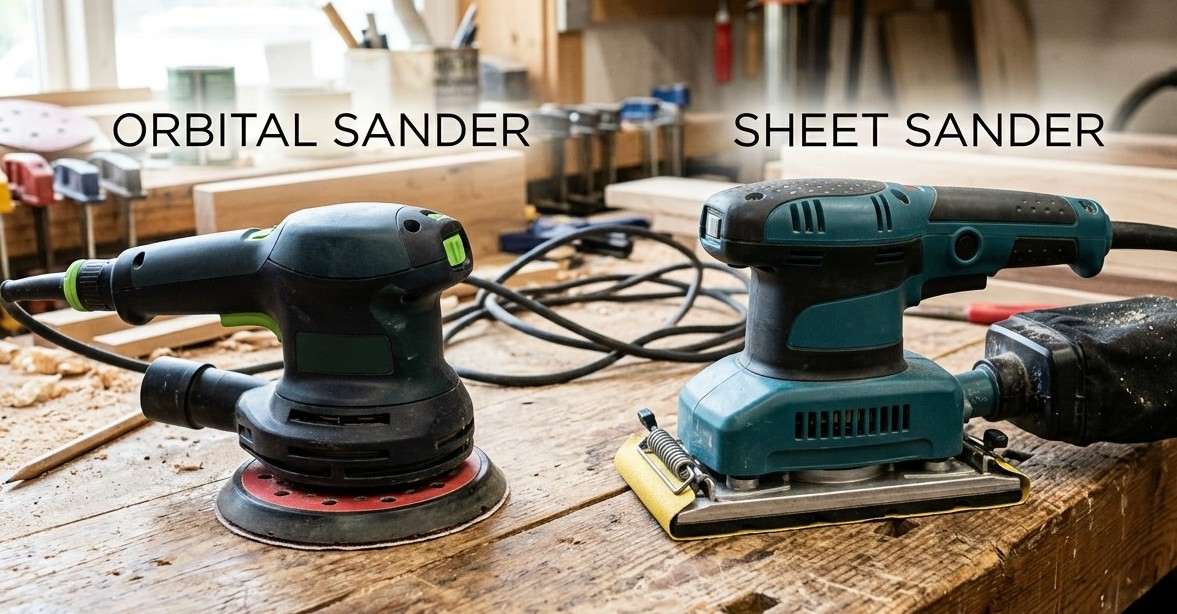
Orbital Sander vs Sheet Sander: Key Differences Explained
Choosing the right power sander can improve sanding speed, surface quality, and overall results. Two popular options for woodworking are the orbital sander and sheet sander. Although both are designed to smooth surfaces, they differ in sanding action, material removal, finish quality, and ideal applications.
So, which one should you choose? This guide compares an orbital sander vs sheet sander to help you select the right tool for your project.
What Is an Orbital Sander?
An orbital sander is a power tool that moves its sanding pad in small circular motions. A random orbital sander combines orbital movement with rotation, helping reduce visible swirl marks while providing effective material removal.
Orbital sanders are commonly used for:
- Woodworking projects
- Furniture refinishing
- Cabinet sanding
- Removing old finishes
- Smoothing rough wood
- Preparing surfaces for painting
A random orbital sander for woodworking is a versatile choice for both surface preparation and finishing.
What Is a Sheet Sander?
A sheet sander, also called a finishing sander or palm sander, uses rectangular sheets of sandpaper. Its sanding pad moves in a controlled orbital pattern, making it suitable for smooth and even finishing.
Common applications include:
- Fine wood sanding
- Cabinet finishing
- Door and trim sanding
- Furniture finishing
- Flat surface sanding
- Preparing wood for paint or varnish
A sheet sander for wood finishing is particularly useful when controlled sanding and a smooth surface are the main priorities.
Orbital Sander vs Sheet Sander
| Feature | Orbital Sander | Sheet Sander |
|---|---|---|
| Sandpaper | Round discs | Rectangular sheets |
| Material Removal | Faster | Slower |
| Finish | Very good | Excellent |
| Flat Surfaces | Very good | Excellent |
| Corners | Limited | Better |
| Sandpaper Cost | Usually higher | Usually lower |
| Best Use | General sanding | Fine finishing |
Which Sander Removes Material Faster?
An orbital sander is generally better for faster material removal. It can remove old paint, finishes, and surface imperfections while producing a relatively smooth result.
A sheet sander is less aggressive and is better suited to controlled finishing. If you need the best sander for removing paint or wood finish, an orbital sander is usually the more practical option.
The sanding disc and motor also allow an orbital sander to cover larger surfaces efficiently. This makes it useful for tables, countertops, wooden panels, and other projects where sanding time matters.
Which Provides a Better Finish?
Both tools can produce a smooth finish when used with the correct sandpaper grit.
A sheet sander works especially well on flat surfaces because its rectangular pad provides consistent contact. A random orbital sander also produces a high-quality finish because its random sanding pattern helps minimize noticeable sanding marks.
For a sander for smooth wood finish, either option can work well depending on the project. Start with a coarser grit when removing imperfections and gradually move to finer grits for final finishing.
Which Is Better for Corners?
Sheet sanders have an advantage when working near straight edges and some corners because of their rectangular sanding pad. However, neither tool is ideal for very tight spaces.
For detailed corner sanding, a detail sander or sanding block may be more suitable.
When sanding edges, use light pressure and avoid holding the tool in one place for too long. This helps prevent uneven surfaces and excessive material removal.
Orbital Sander vs Sheet Sander for Furniture
Both sanders can be useful for furniture restoration and woodworking.
An orbital sander is a good choice for removing old paint, varnish, and surface imperfections from furniture. It can also prepare large areas before applying a new finish.
A sheet sander is useful for final smoothing, particularly on flat cabinet doors, table surfaces, shelves, and wooden panels. Using progressively finer sandpaper can help create a surface that is ready for staining or painting.
Which Sander Is Better for Woodworking?
Choose an orbital sander if you need:
- Faster material removal
- Versatile sanding performance
- Furniture refinishing
- Paint removal
- Smooth finishing
- Sanding for larger projects
Choose a sheet sander if you need:
- Fine surface finishing
- Affordable sandpaper
- Controlled sanding
- Excellent performance on flat surfaces
- Furniture, cabinet, door, and trim finishing
For general woodworking, an orbital sander is usually the more versatile option. A sheet sander is ideal when fine finishing is the main goal.
How to Choose the Right Sander
Before choosing a sander, consider the type of project, surface shape, required finish, and sanding frequency. Also check the tool’s dust collection system, weight, vibration, grip, and sandpaper availability.
If you regularly work on large wooden surfaces, an orbital sander can save time during preparation. If you mainly perform finishing work on flat panels or furniture, a sheet sander may provide better control.
The right power sander for woodworking should also be comfortable to hold for extended periods. Look for an ergonomic grip, manageable vibration, easy sandpaper replacement, and effective dust collection.
Avoid applying excessive pressure while sanding. Let the tool move steadily across the surface to achieve a more even result.
Final Verdict
For most general woodworking tasks, an orbital sander is the better all round choice because it offers effective material removal and smooth finishing. A sheet sander is a better option for controlled finishing, flat surfaces, and economical sandpaper use.
If you are comparing sanding tools for different woodworking applications, Power Blitzz, a power tools supplier in UAE, provides information on suitable power tools and sanding equipment. For help choosing the right tool for your specific application, contact our team for further guidance.
Explore More Tool Comparisons
- Cut Off Saw vs Chop Saw: Key Differences Explained helps explain how these two cutting tools differ in design, performance, and applications.
- Should I Choose Corded or Cordless Power Tools? explains the key differences to consider when selecting power tools for different tasks.
- Portable vs Stationary Air Compressors: Which One to Choose? compares compressor types based on mobility, capacity, and application requirements.
- CFM vs PSI: Air Pressure: What You Need to Know explains how CFM and PSI affect air compressor performance and pneumatic tool use.
- Cordless Impact Wrench vs Pneumatic: Which One Is Right for Your Needs? compares both impact wrench types to help understand their different uses and advantages.

Popular Posts
November 8, 2023
November 14, 2023
November 28, 2023
December 4, 2023
December 13, 2023
Copyright © 2024 – Power Blitzz– All rights reserved.