
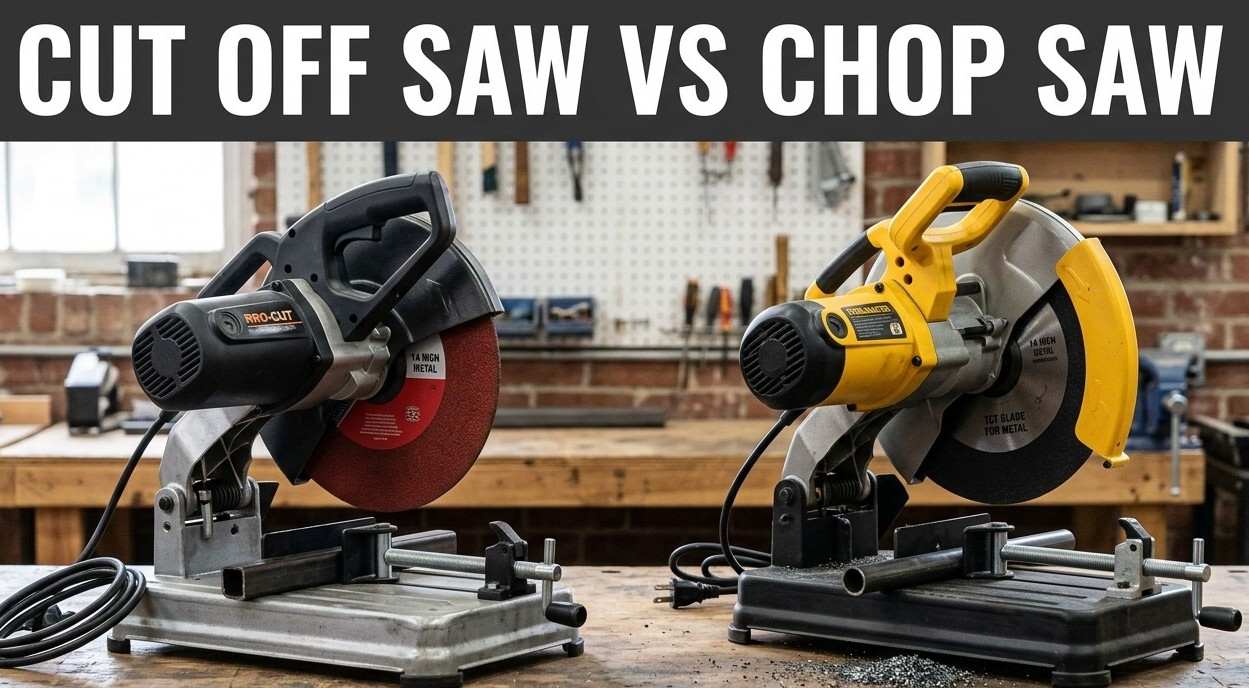
Cut Off Saw vs Chop Saw: Key Differences Explained
When comparing a cut off saw vs chop saw, it is easy to assume they are completely different tools. In reality, the terms are often used interchangeably, especially for metal cutting machines. Both tools are designed to make fast, straight cuts through materials such as steel, pipes, rods, and metal sections.
However, differences can exist in their design, blade type, and intended application. Understanding these differences helps you choose the right metal cutting saw for your work.
What Is a Cut Off Saw?
A cut off saw is a power tool designed to make quick, straight cuts through hard materials. In metalworking, it usually uses an abrasive cutting disc or a specialized metal cutting blade.
The workpiece is secured on the base while the cutting wheel moves downward through the material. This makes the tool useful for cutting metal pipes, steel bars, angle iron, channels, and rods.
Cut off saws are commonly used when speed and straight cuts are more important than detailed or precision cutting.
What Is a Chop Saw?
A chop saw is a stationary cutting machine that uses a circular blade or abrasive wheel to cut materials. The blade is lowered onto a secured workpiece to make a straight cut.
Depending on the model, a chop saw can be designed for metal, wood, masonry, or other materials. A metal chop saw may use an abrasive wheel or carbide tipped blade.
Because of this, the terms chop saw and cut off saw are sometimes used to describe the same type of machine.
Cut Off Saw vs Chop Saw: Key Difference
The main difference is often terminology rather than machine design.
A cut off saw generally refers to a machine intended for cutting material into sections. A chop saw describes the cutting action, where the blade moves downward onto the workpiece.
In many workshops, a metal chop saw can essentially be a metal cut off saw. Manufacturers may use the terms differently depending on the machine’s design, power, blade type, and intended application.
For this reason, always check the machine specifications instead of relying only on its name.
Cut Off Saw vs Chop Saw: Comparison
| Feature | Cut Off Saw | Chop Saw |
|---|---|---|
| Main Purpose | Fast material cutting | Fast straight cutting |
| Cutting Motion | Downward | Downward |
| Common Materials | Metal, steel, pipes, rods | Metal, wood, masonry, depending on model |
| Blade Type | Abrasive wheel or cutting blade | Abrasive wheel or circular blade |
| Common Use | Fabrication and construction | Workshops and construction |
Specifications vary between models, so check the manufacturer’s recommendations before use.
Cut Off Saw vs Chop Saw for Metal Cutting
For cutting metal, both machines can be effective when fitted with the correct blade or abrasive disc. A Cut Off Saw, BT-COB14 is one example of a cut off saw designed for metal cutting applications.
A metal chop saw can also be used for repetitive cuts through steel tubing, pipes, bars, and structural sections.
When choosing a machine, consider its motor power, blade diameter, maximum cutting capacity, vise design, and compatibility with your material. For thicker workpieces, always check the manufacturer’s maximum cutting capacity.
Abrasive Cut Off Saw vs Carbide Blade Saw
The blade or disc can make a significant difference in cutting performance.
An abrasive cut off saw uses an abrasive disc that removes material as it cuts. These wheels are widely used for steel and other metals.
A carbide tipped blade uses cutting teeth instead. Depending on the application, it can provide fast cuts and may produce less heat and debris than an abrasive wheel.
The blade must always be suitable for the material and machine.
When Should You Use a Cut Off Saw?
A cut off saw is a practical choice when you need fast, straight cuts in metal.
Common applications include:
- Steel pipes and tubes
- Metal rods and bars
- Angle iron
- Steel channels
- Repetitive fabrication cuts
Its built in vise helps hold the workpiece securely while the cutting wheel moves through the material.
How to Choose the Right Metal Cutting Saw
When choosing between a cut off saw and chop saw, focus on the application rather than the terminology. You can also explore cutters and saws to compare suitable options for different cutting requirements.
1. Material
Identify whether you will cut mild steel, stainless steel, aluminum, pipe, tubing, or another material. Different materials require compatible blades or discs.
2. Cutting Capacity
Check the maximum diameter and dimensions the saw can handle. A compact machine may not be suitable for large structural sections.
3. Blade Type
Choose a blade or cutting wheel designed for your material. The wrong blade can reduce performance and create safety risks.
4. Motor Power
Consider motor power based on your workload and material thickness. Power should be evaluated alongside blade speed and cutting capacity.
5. Vise and Base
A strong vise keeps the workpiece secure, while a stable base improves control during repetitive cutting.
6. Safety Features
Look for blade guards, secure clamps, ergonomic handles, and spark protection. Always follow the manufacturer’s instructions and use suitable personal protective equipment.
Choosing the Right Saw for Your Application
The right saw depends on the material, cutting capacity, blade type, and frequency of use. For regular metal fabrication, a cut off saw or metal chop saw with the correct cutting wheel can provide fast, consistent results. Instead of focusing only on the name of the machine, compare its specifications with your actual cutting requirements.
Final Thoughts
The difference between a cut off saw and chop saw is often based on terminology and intended use rather than a fundamental difference in design. Both can provide fast and consistent straight cuts when the correct machine and blade are selected.
Before choosing a metal cutting saw, consider your material, required cutting capacity, workload, and blade type. For suitable cutting equipment and tools, Power Blitzz, a reliable power tools supplier in UAE, can help you find options that match your application. Contact our team to discuss your requirements and choose the right solution.
More Helpful Guides
- Choosing the Right Cut Off Machine for High Volume Production Learn which cut off machine features matter most for demanding, high volume cutting applications.
- Applications of Cut Off Machines in Construction and Metalworking Explore how cut off machines are used across construction, fabrication, and metalworking applications.
- Essential Power Tools for Professionals and DIYers Discover the essential power tools for improving efficiency and productivity in professional and DIY projects.
- How to Identify a Faulty Armature in Power Tools Learn the common warning signs of armature failure and what can cause power tool performance issues.

Popular Posts
November 8, 2023
November 14, 2023
November 28, 2023
December 4, 2023
December 13, 2023
Copyright © 2024 – Power Blitzz– All rights reserved.